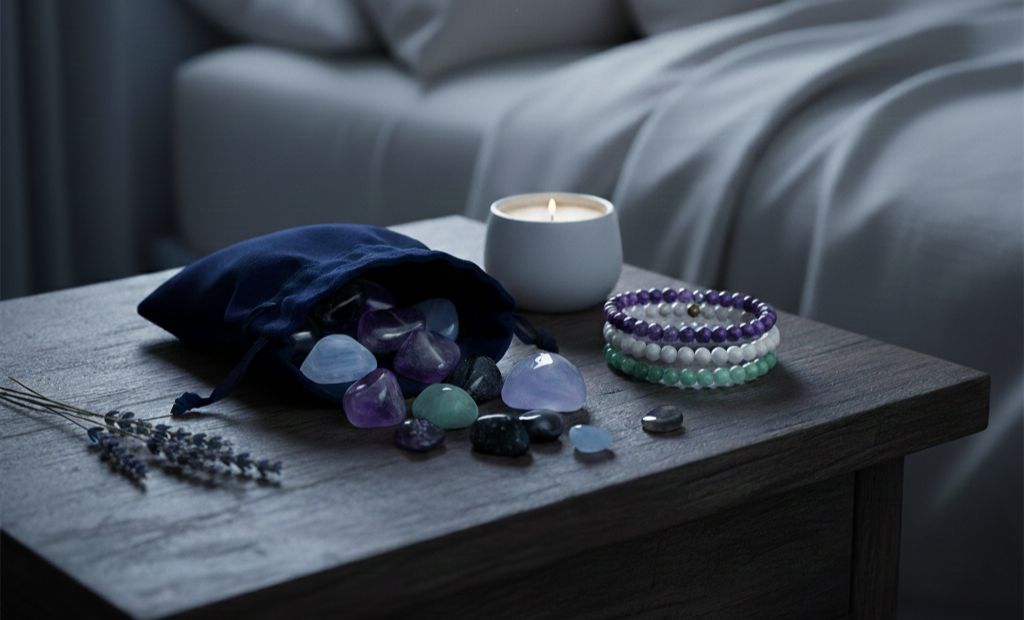
Crystals for Sleep: Which Ones Help You Rest Better
Sleep is one of the most sensitive reflections of how we’re truly doing. When the mind is busy, the nervous system activated, or emotions unprocessed, rest is often the first thing to shift.
Many people turn to crystals as part of their nighttime routine. Not as sleep “solutions,” but as gentle sensory anchors that may support the body in winding down.
Crystals don’t create sleep on their own. What they can do is help shape an environment that feels calmer, softer, and more intentional — conditions where rest is more likely to happen.
Why Sleep Is About More Than the Mind
Trying to think yourself into sleep rarely works. The body needs cues of safety and slowness before it lets go.
- Soft lighting
- Reduced stimulation
- Familiar routines
- Calming sensory input
These are the signals that help the nervous system shift out of alert mode. Crystals can become part of this sensory landscape — not through force, but through association and repetition.
Over time, simply seeing or touching a specific stone at night can become a cue that the day is ending.
Crystals Often Chosen for Rest
Different crystals are traditionally associated with calming or grounding qualities. While experiences vary, some are commonly used as part of bedtime rituals.
Amethyst
Often linked with mental quiet and emotional settling, amethyst is frequently placed near the bed or under a pillow. Some people find its presence supportive when the mind feels overactive at night.
Lepidolite
This stone is commonly associated with soothing transitions and emotional balance. Its soft, gentle appearance tends to feel less stimulating, which can suit nighttime environments.
Moonstone
Connected with cycles and natural rhythms, moonstone is sometimes chosen by those wanting to reconnect with a steadier internal pace, especially if sleep patterns feel irregular.
Howlite
Known for its subtle, matte appearance, howlite is often used by people who feel mentally restless before bed. It’s commonly placed on a bedside table as a visual reminder to slow down.
Black Tourmaline or Smoky Quartz
For those who feel ungrounded or overstimulated, darker stones are often chosen to create a sense of stability and containment in the sleep space.
The key is not choosing the “right” crystal, but noticing which one feels calming rather than energising to you.
How to Work With Crystals at Night
The way crystals are used often matters more than which ones are chosen. Simple, repeatable practices tend to be most supportive.
- Placing one stone on your bedside table and touching it as part of your wind-down routine
- Holding a crystal for a few slow breaths before turning off the light
- Keeping the same stone near your bed each night to build familiarity
- Pairing the crystal with another calming cue, like dim lighting or a cup of herbal tea
Over time, the stone becomes less of an object and more of a signal: it’s safe to rest now.
When Crystals Aren’t the Answer
If sleep challenges are ongoing, intense, or connected to anxiety, stress, or health concerns, crystals are best seen as supportive companions — not replacements for deeper care.
Sometimes the most powerful sleep support comes from adjusting daily rhythms, reducing evening stimulation, or seeking professional guidance when needed.
Crystals can be part of the environment of rest, but they don’t carry the responsibility for it.
Building a Night Ritual That Feels Supportive
A calming sleep ritual doesn’t need to be elaborate. In fact, simpler often works better.
- One stone
- One repeated action
- One moment of pause
Consistency helps the body learn what to expect. Over time, this rhythm can feel more regulating than any single tool on its own.
A Gentle Invitation
If you’re drawn to working with crystals as part of your nighttime routine, choosing stones that are thoughtfully sourced and intentionally offered can help you build a more personal relationship with them.
At Conscious Collective, our crystals are shared as quiet companions for everyday rituals — including the small, meaningful moments that help you soften into rest.
You’re welcome to explore what supports your sleep, in your own way and at your own pace.