Crystals have surged in popularity over the last decade, finding their way into wellness routines, meditation spaces, home decor, and self-care rituals around the world. Yet for many people, the mystical or metaphysical claims around crystals can feel like a barrier to entry. If you find yourself curious about crystal healing but skeptical of the spiritual language often associated with it, you are not alone — and you may not need to believe in the supernatural to find value in working with crystals.
This blog explores an entirely grounded, evidence-adjacent approach to crystals — one rooted in psychology, sensory experience, mindfulness, and intentional living. Whether you are a curious skeptic or simply someone looking for fresh wellness tools, there may be more to crystals than meets the eye — without requiring any leap of faith.
The Psychology of Objects and Meaning
Human beings have long assigned meaning to physical objects. From wedding rings to lucky charms, from family heirlooms to vision boards, objects can serve as powerful anchors for our intentions, memories, and values. This is not magical thinking — it is deeply rooted in cognitive psychology and behavioral science. Researchers studying the psychology of personal objects have noted that meaningful objects can influence mood, motivation, and focus in measurable ways.
Crystals may function in a similar manner for many people. When someone holds a rose quartz during a difficult conversation or places an amethyst on their desk during a stressful workday, they may be doing something psychologically profound: using a tangible cue to access a desired mental or emotional state. This is sometimes referred to as ’embodied cognition,’ the idea that our physical environment and sensory experiences can shape our inner world.
You do not necessarily need to believe that a crystal holds special energy to benefit from using it as a symbol, a reminder, or a grounding tool. The meaning you consciously assign to it might be enough to make it useful in your daily wellness practice.
Crystals as Mindfulness Anchors
One of the most practical, belief-free ways to use crystals is as mindfulness anchors. Mindfulness — the practice of bringing deliberate, non-judgmental attention to the present moment — has been studied extensively and may offer benefits ranging from reduced stress and anxiety to improved emotional regulation and focus. The challenge many people face with mindfulness is actually remembering to practice it throughout the day.
A crystal placed in your pocket, on your desk, or around your neck can serve as a tactile reminder to pause, breathe, and check in with yourself. Every time you notice the stone — its weight, its texture, its temperature — it can function as a gentle prompt to return to the present moment. This approach does not require belief in crystal energy; it simply uses the stone as a sensory cue, much like setting an alarm or writing a sticky note.
Research in habit formation suggests that environmental cues play a powerful role in triggering behaviors. By associating a crystal with a desired practice — whether that is deep breathing, gratitude, or simply a mindful pause — you may be able to build that practice into your daily routine more effectively.
The Sensory and Aesthetic Dimension
There is also something to be said for the simple sensory pleasure that crystals can offer. Many crystals are visually stunning, with colors, patterns, and luminosity that may naturally draw the eye and calm the nervous system. Color psychology research suggests that certain hues can influence mood — blues and greens may promote calm, while warm tones might feel energizing. Crystals like blue lace agate, green aventurine, or golden citrine may offer these kinds of aesthetic benefits regardless of any metaphysical properties.
Beyond visual appeal, the tactile quality of crystals may offer grounding effects. Smooth, cool stones can have a soothing texture that may be helpful when you are anxious or overwhelmed. Fidgeting with a worry stone — a smooth, polished crystal shaped for the thumb — can potentially provide a form of sensory regulation that supports focus and calm. This is a tangible, physical mechanism with no belief system required.
Creating a visually appealing wellness space with crystals, candles, plants, and other natural elements may also contribute to what environmental psychologists call ‘restorative environments’ — spaces that help reduce mental fatigue and promote recovery from stress. You might consider your crystal display less as a spiritual altar and more as a carefully curated sensory environment designed to support your wellbeing.
Crystals as Tools for Intention-Setting
Another powerful, non-supernatural use of crystals is in the practice of intention-setting. Setting intentions — consciously choosing what you want to focus on, cultivate, or work toward — is a well-regarded practice in positive psychology, coaching, and mindfulness traditions. The act of writing down goals, affirming values, or regularly reflecting on priorities has been shown to support motivation and goal achievement.
Crystals can act as physical representations of your intentions. You might choose a specific stone to represent a personal goal — perhaps a green stone for financial growth, a pink stone for nurturing relationships, or a black stone for boundaries and protection. Placing it where you can see it regularly, or holding it during your morning reflection, can serve as a consistent reminder of what matters to you.
This approach treats crystals as you might a vision board or a journaling practice — as a tool for articulating and anchoring your intentions in a physical form. The value lies not in the crystal itself but in the practice of conscious, intentional living that it supports.
Ritual as Self-Care
Perhaps the deepest reason crystals may hold value even for skeptics is their role in ritual. Human beings are deeply ritualistic creatures. Morning routines, bedtime rituals, seasonal celebrations — these structured practices can provide a sense of continuity, comfort, and self-agency that supports mental health. Research in psychology suggests that personal rituals may help reduce anxiety, increase focus, and foster a sense of meaning.
Incorporating crystals into a personal ritual — whether that is a morning meditation, an evening journaling practice, or a weekly reset routine — might enhance the ritual’s effectiveness by adding a tactile, symbolic element. The act of intentionally picking up a stone, holding it, and engaging in a reflective practice can signal to your nervous system that it is time to shift into a different mode.
You do not need to believe that the crystal is doing anything metaphysical. The ritual itself — consistent, intentional, and personally meaningful — may be doing the work. The crystal serves as a beautiful, tangible centerpiece for that practice.
Choosing Your Crystals Without the Mysticism
If you would like to start exploring crystals from a practical standpoint, the good news is that you can choose stones based on whatever resonates with you aesthetically, emotionally, or symbolically. You might ask yourself: What quality do I want to cultivate more of right now? What does this stone’s color or texture remind me of? Does holding it make me feel calm, energized, or grounded?
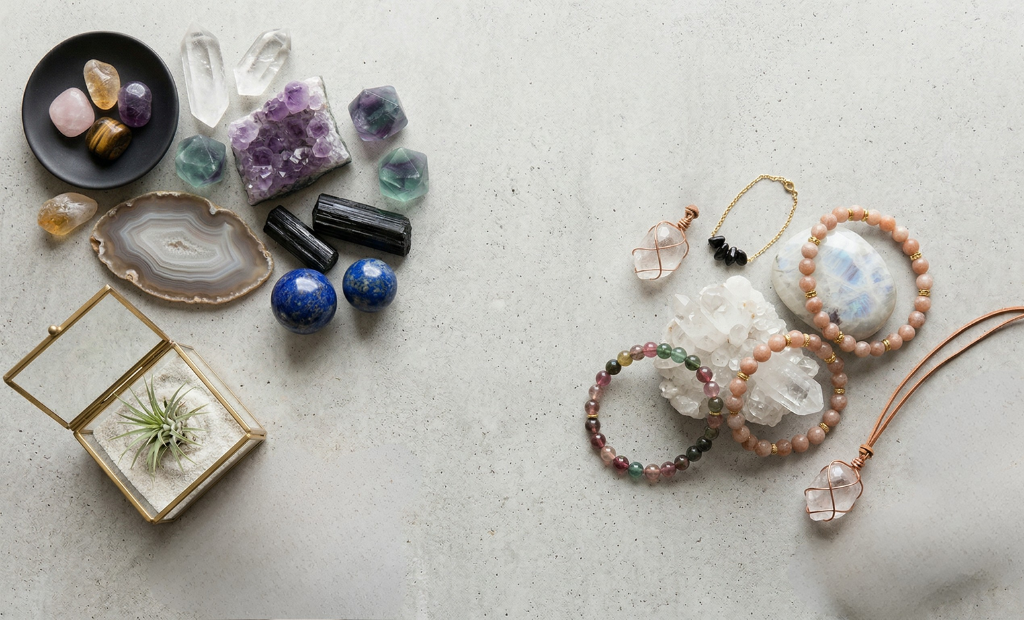
Some popular choices and the qualities they are commonly associated with — not as metaphysical claims, but as symbolic intentions — include amethyst for calm and clarity, rose quartz for self-compassion and love, citrine for optimism and motivation, black tourmaline for boundaries and grounding, and clear quartz for focus and mental clarity. You can assign your own meanings too, making the practice entirely personal.
The bottom line is that you may not need to believe in crystal energy to find crystals genuinely useful. Used thoughtfully, they can be beautiful, grounding, and meaningful tools that support mindfulness, intention, and wellbeing — entirely on your own terms.