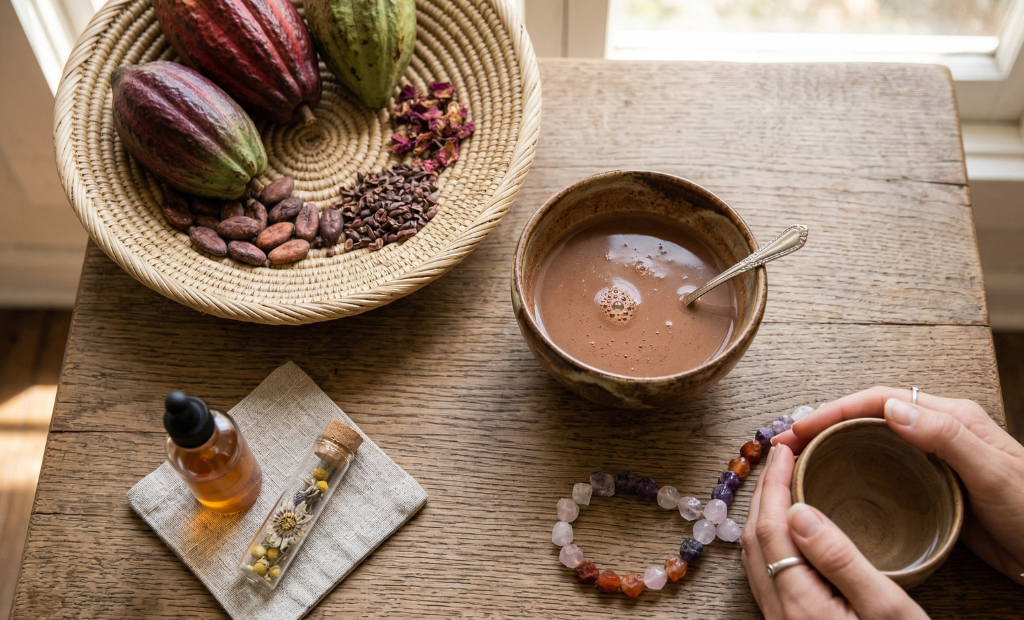
Ceremonial cacao has experienced a remarkable rise in the modern wellness landscape. Once found only in indigenous Mesoamerican ceremonies, this minimally processed form of cacao — often consumed as a warm, thick, spiced drink — has become a popular tool for meditation, breathwork, sound healing events, and personal ritual. But as more people incorporate it into regular practice, a natural question arises: can ceremonial cacao become addictive? And what does the nervous system actually experience when you drink it?
This blog takes a balanced, nervous-system-informed look at what ceremonial cacao is, how it may interact with your body and brain, and whether regular or enthusiastic use might carry any risk of dependence. As always, the conversation around how any substance interacts with individual physiology is nuanced, and what is true for one person may not be true for another.
What Makes Ceremonial Cacao Different
Before exploring the question of addiction, it helps to understand what ceremonial cacao actually is. Unlike the heavily processed cocoa powder found in supermarkets — or the sugar-laden chocolate bars that line the candy aisle — ceremonial cacao is made from minimally processed whole cacao beans. The cacao paste or block retains a high concentration of naturally occurring compounds, including theobromine, caffeine, phenylethylamine (PEA), anandamide, flavonoids, and magnesium.
These compounds may collectively contribute to the distinctive physical and emotional experience many people report when drinking ceremonial cacao: a gentle opening of the heart, heightened sensory awareness, mild euphoria, enhanced focus, and a warm, grounded energy. The quality and origin of the cacao, as well as preparation method, can significantly affect the potency and character of these effects.
The Key Active Compounds and Their Effects
Theobromine is perhaps the most significant active compound in cacao from a nervous system perspective. Unlike caffeine, which tends to produce a sharp, adrenal spike in energy followed by a crash, theobromine is a gentler stimulant that works differently in the body. It may produce a sustained, mellow energy boost and increase blood flow, including to the brain. Theobromine is also a mild bronchodilator and vasodilator, which may contribute to the warm, open feeling many people associate with cacao ceremony.
Caffeine is present in cacao but typically in smaller amounts than in coffee. Combined with theobromine, it may contribute to increased alertness and focus without the harsh jitteriness that some people experience from coffee alone. The specific ratio of theobromine to caffeine in cacao may be part of why many people describe its energy as ‘clean’ or ‘heart-centered.’
Phenylethylamine (PEA) is a naturally occurring compound that may influence mood by modulating dopamine and serotonin activity. It has sometimes been called the ‘love chemical’ because of the pleasant, mood-lifting sensations it can produce. However, PEA is metabolized quite rapidly in the body, and its effects may be subtle rather than dramatic for most people.
Anandamide, sometimes called the ‘bliss molecule,’ is an endocannabinoid naturally produced in the brain that may contribute to feelings of wellbeing and euphoria. Cacao contains anandamide as well as compounds that may slow its breakdown, potentially prolonging its mood-elevating effects. This is a fascinating area of emerging research and may partly explain the sense of joy and openness that many cacao practitioners describe.
Can You Become Addicted to Ceremonial Cacao?
This is the central question, and the honest answer is: it depends on how we define addiction. Clinical addiction typically involves physical dependence (the body adapting to a substance so that its absence causes withdrawal symptoms), tolerance (needing more of the substance to achieve the same effect), and compulsive use despite negative consequences. By these stricter clinical criteria, ceremonial cacao would not typically be classified as addictive in the way that alcohol, nicotine, or opioids might be.
However, cacao does contain psychoactive compounds — primarily theobromine and caffeine — and regular, high-dose consumption may lead to mild physical habituation in some individuals. For example, someone who drinks a large dose of ceremonial cacao every day might find that they experience mild headaches or fatigue if they suddenly stop, much as a habitual coffee drinker might experience caffeine withdrawal. This is not the same as addiction, but it does suggest that the nervous system may adapt to regular cacao use.
There is also the question of psychological or behavioral dependence, which can develop around any pleasurable or mood-altering experience — including exercise, meditation, or indeed cacao. If someone finds that they feel unable to start their day without cacao, or uses it compulsively to manage difficult emotions rather than processing them, that pattern might be worth examining — not because cacao is inherently harmful, but because any reliance that undermines autonomy or avoidance of emotional growth can be worth reflecting on.
The Nervous System and Cacao: What May Actually Be Happening
From a nervous system perspective, ceremonial cacao may have some genuinely supportive effects. The combination of heart-opening compounds, gentle stimulation, and magnesium (which plays a key role in nervous system function and stress response) can create a physiological environment that supports calm alertness, emotional openness, and focused presence. Many practitioners use cacao as a preparation tool for meditation or inner work precisely because of this quality.
The warmth and ritual of preparing and drinking cacao may also activate the parasympathetic nervous system — the ‘rest and digest’ branch — through sensory pleasure, slowing down, and intentional presence. This effect may be just as significant as the active compounds themselves. The ceremony around cacao may matter as much as the cacao.
For individuals with anxiety, heart conditions, or caffeine sensitivity, higher doses of ceremonial cacao may cause overstimulation, increased heart rate, or discomfort. It is always worth being mindful of how your body responds and adjusting your practice accordingly. The traditional recommendation for a full ceremonial dose is around 40–42 grams, but smaller doses may be more appropriate for sensitive individuals.
Signs That Your Relationship with Cacao May Need Attention
Most people who use ceremonial cacao as part of a mindful, intentional wellness practice are unlikely to develop problematic patterns. However, as with any tool, the relationship you form with it matters. Some signs that it might be worth reflecting on your cacao use include: feeling like you cannot function without it, using it to avoid difficult emotions rather than process them, experiencing physical discomfort when you go without it, or noticing that the pleasurable effects have significantly diminished over time.
These signs do not necessarily mean you are addicted in a clinical sense, but they may be worth attending to as part of a broader commitment to self-awareness and nervous system health. Taking regular breaks from cacao — sometimes called ‘cacao fasts’ in ceremonial traditions — can be a healthy way to reset your relationship with it and reconnect with your baseline state.
A Balanced Perspective
Ceremonial cacao, when used mindfully and in appropriate doses, may be a genuinely supportive wellness tool for many people. Its active compounds can gently support mood, focus, and emotional openness in ways that are largely safe for healthy individuals. The risk of classical addiction is considered low, though mild physical habituation and psychological reliance are possibilities worth being aware of.
As with many things in wellness, the most important variable might not be the substance itself but the relationship and intention you bring to it. Used as part of a conscious, reflective practice, ceremonial cacao can be a beautiful ally on the path of inner work. Used as a daily necessity or emotional crutch, any tool — however gentle — may become something worth examining more carefully.