There is a particular kind of disorientation that can come with travel, even when the trip itself is joyful or long awaited. New beds, unfamiliar light, shifted time zones, and a break from daily routine can all chip away at a sense of groundedness. For anyone who maintains a personal ritual or contemplative practice at home, travel often raises a quiet question. Is it possible to keep that practice alive when so much of the surrounding structure has been stripped away, or does travel simply mean pressing pause until returning home again?
Most personal practices, whether meditation, prayer, journaling, or something more idiosyncratic, tend to rely on a scaffold of small environmental cues. A particular chair, a familiar corner of a room, a certain time of day marked by the position of light through a window. These cues are not the practice itself, but they support it, often without much conscious awareness. When travel removes these cues all at once, it can feel surprisingly difficult to access the same internal state that once seemed to arrive so naturally at home.
This is not a failure of willpower so much as a reflection of how deeply habits and rituals are woven into environment. Behavioral research on habit formation frequently points to context as one of the strongest predictors of whether a behavior continues or lapses. Removing the usual context does not erase the desire to practice, but it can make the practice require more conscious effort than it did before.
One approach to sustaining ritual while traveling involves identifying which elements of a home practice are essential and which are simply comfortable but replaceable. A person who meditates each morning while seated in a particular chair might discover that the chair itself was never truly necessary, only familiar. What may matter more is a consistent physical posture, a specific time of day, or a small object that can travel easily and be placed in a new environment each time.
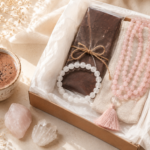
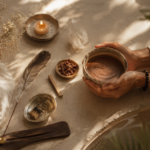
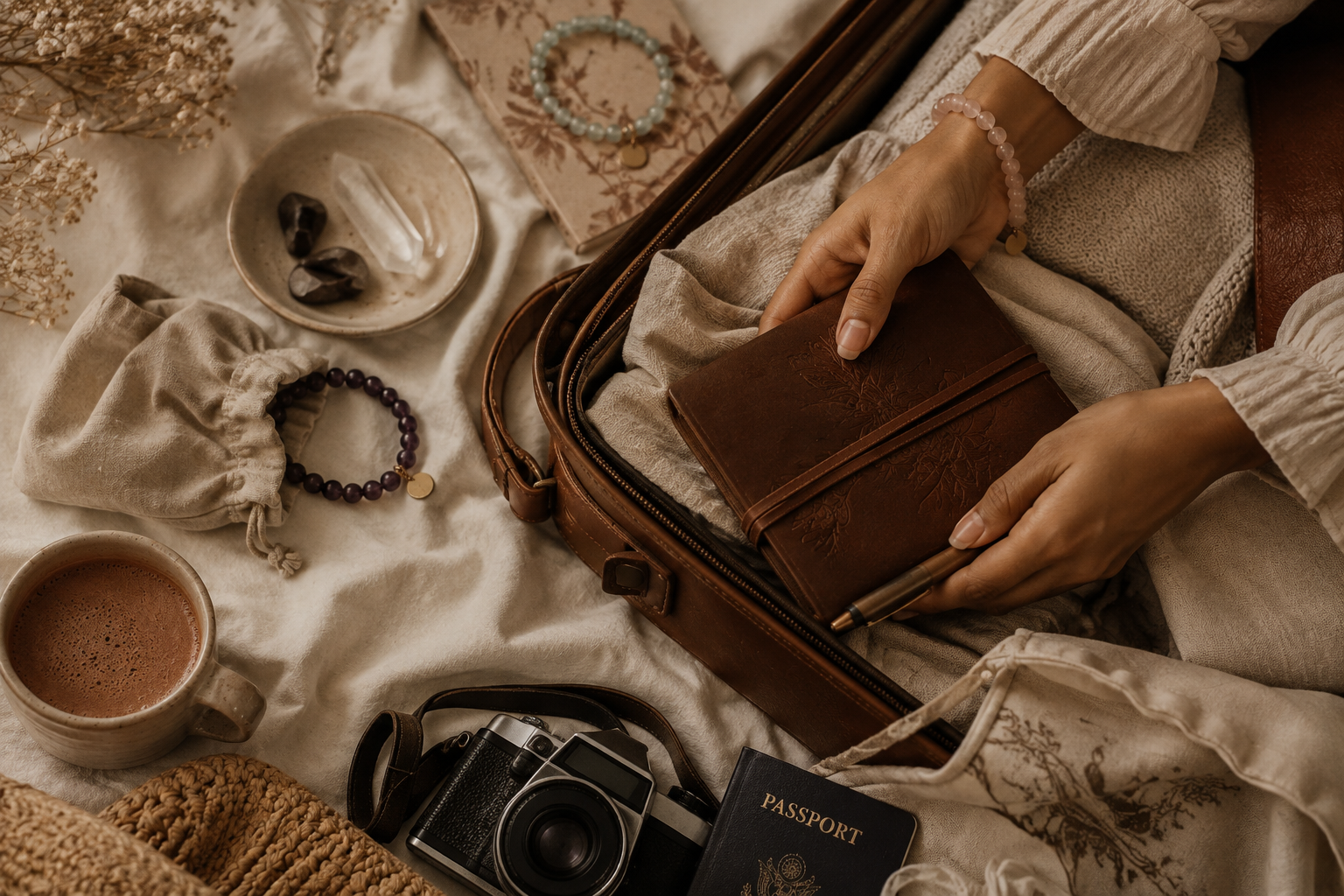
Small, portable ritual objects tend to serve this function particularly well. A 108-bead japmala can slip into a pocket or bag without taking up meaningful space. A single tealight candle weighs almost nothing and can be lit in nearly any hotel room or guesthouse, provided local safety rules allow it. A small piece of ceremonial cacao, wrapped carefully, can travel for days without spoiling and can be prepared with little more than hot water and a few quiet minutes.
The goal with these portable anchors is not to recreate an exact replica of the home practice but to offer the mind and body a familiar signal, something that says this moment belongs to practice, even if everything else around it has changed.
Travel often compresses time in ways that can make longer practices difficult to sustain. A meditation session that normally lasts thirty minutes at home might need to shrink to five or ten minutes while traveling, particularly during busier stretches of a trip. Rather than viewing this as a failure or a lesser version of the practice, it may help to think of it as a different expression of the same underlying intention.
Some practitioners find it useful to define a minimum viable version of their practice ahead of time, something small enough to feel achievable even on the busiest travel day. This might be as simple as three slow breaths taken while seated on the edge of a bed, or a single pass through a shortened mala sequence rather than a full 108-count cycle. Having this minimum version defined in advance can reduce the pressure to either do the full practice or skip it entirely, offering a middle path that keeps the thread of consistency intact.
Travel also offers something a home practice rarely can, which is genuine novelty. Rather than treating unfamiliar surroundings purely as an obstacle to overcome, some practitioners find value in allowing the new environment to shape the practice itself. A morning walk through an unfamiliar city, taken slowly and with attention, might become its own form of moving meditation. The sound of a language not understood might become an unexpected aid to quieting the analytical mind, since there is little temptation to parse and interpret words. Even the disorientation of jet lag, uncomfortable as it can be, sometimes creates unusual windows of stillness in the early hours of the morning before a destination has fully awakened.
This is not to suggest that travel is always easy on a practice, since fatigue, unfamiliar schedules, and the simple busyness of exploring a new place can make consistency genuinely difficult. But approaching the trip with curiosity about how the practice might adapt, rather than rigid insistence that it look exactly as it does at home, can soften the sense of loss that sometimes accompanies a disrupted routine.
A few practical matters are worth considering before packing ritual tools for travel. Open-flame items such as tealight candles may not be permitted in certain accommodations or during certain modes of transport, so it is worth checking local rules or considering flameless alternatives such as battery-operated candles for situations where an open flame is not appropriate. Ceremonial cacao and other consumable ritual items should be packed with attention to customs regulations, particularly when crossing international borders, since some countries maintain restrictions on food imports.
Fragile items such as crystals or delicate japmalas may benefit from a small padded pouch to prevent damage during transit. Some practitioners choose to travel with a simpler or less sentimentally significant version of their ritual tools specifically to avoid the stress of potential loss or damage to a more cherished object left safely at home.
Perhaps the most helpful shift in perspective for maintaining ritual while traveling involves loosening the expectation that practice must look identical every single day to count as meaningful. A practice interrupted by travel and resumed upon return is still a continuous practice, not a broken one that must be rebuilt from scratch. The occasional missed day, or the shortened version practiced hurriedly in an airport lounge, does not erase the months or years of consistency that came before it.
Some practitioners find that travel, despite its disruptions, ultimately deepens their relationship to ritual by forcing a distinction between the essential core of the practice and the comfortable but non-essential trappings that surround it at home. Stripped down to its simplest form, whether that is a few counted breaths, a handful of mala beads moved slowly between the fingers, or a quiet moment of gratitude before a meal in an unfamiliar place, the practice reveals what it was really offering all along.
Returning from travel often brings its own small ritual moment, a chance to notice what shifted during the time away and what remained steady. Some practitioners use the first day back home as an opportunity to consciously return to their full practice, treating it almost as a small homecoming ceremony in itself. Others find that certain adaptations made while traveling, such as a shortened meditation or a new time of day for practice, end up sticking around even after returning to a familiar environment, suggesting that travel occasionally reveals improvements to a practice that might not have been discovered otherwise.
Whether a person maintains an unbroken thread of daily practice through every trip or simply does their best with whatever time and space is available, the willingness to keep returning to the practice, again and again, in whatever form the moment allows, may matter more than perfect consistency ever could.
If you are preparing for your next journey, explore our collection of travel-friendly ceremonial cacao, 108-bead japmalas, crystal bracelets, and portable ritual tools designed to help you stay connected to your practice wherever life takes you.

Our offerings—ceremonial cacao, crystals, candles, and journals—are designed to support mindfulness, self-connection, and sacred daily rituals. Every product is ethically sourced, handcrafted with care, and infused with meaning to help you slow down, tune in, and create moments of presence.
© 2025 All rights reserved Conscious Collective