Is Taste Really Just About Our Taste Buds?
When we drink cacao, our taste buds help us detect basic tastes such as bitterness, sweetness, and acidity. However, much of what we describe as flavour also involves our sense of smell. Aroma compounds released from food and drink can reach the olfactory system while we eat or drink, contributing to the overall sensory experience. Texture, temperature, and even the appearance of a beverage can influence how we perceive it. This means that two cups containing exactly the same ingredients might seem different if they are served at different temperatures or in different surroundings. For example, a warm cup of cacao may release aromas differently from a cooler preparation. A thick, creamy beverage might also feel richer than the same cacao prepared with a larger quantity of water. Our attention can influence which characteristics we notice. If you are particularly focused on the bitterness of cacao, you might become more aware of it. If you are enjoying a conversation while drinking, you may pay less attention to individual flavour notes. The ingredients remain the same, but your experience of them may change.
Why Cacao Might Taste Different on a Stressful Day
Have you ever noticed that food seems less appealing when you are feeling overwhelmed? Some people experience changes in appetite during stressful periods. Others may find themselves seeking familiar foods or particular flavours. Research has explored relationships between stress, appetite, and sensory perception, but the findings do not suggest that everyone responds in the same way. Depending on the individual and circumstances, stress may be associated with changes in food preferences or the way certain tastes are perceived. This could influence how appealing a cup of cacao feels on a particular day. Perhaps you normally enjoy its natural bitterness but find yourself preferring something sweeter when you are tired or preoccupied. Alternatively, you might appreciate its strong flavour precisely because you want something different from your usual drinks. Neither response necessarily indicates anything significant about your emotional health. Sometimes, our preferences simply vary. It may be more useful to notice these differences without interpreting every change in taste as a message from the body.
Can Expectations Influence How Much We Enjoy Cacao?
Imagine someone offering you two cups of cacao. They describe the first as an ordinary chocolate drink and the second as a carefully sourced, premium ceremonial cacao. Even if both cups contain the same beverage, those descriptions might influence what you expect before tasting them. Research into food perception suggests that expectations, packaging, and contextual information can sometimes influence how people evaluate flavour. This does not mean that quality is imaginary or that different cacao products taste identical. It simply suggests that our expectations can become part of the tasting experience. If you have heard that ceremonial cacao should taste intensely bitter, you might pay particular attention to that characteristic. If someone describes a cacao as having fruity notes, you may begin looking for those flavours. Sometimes, these descriptions can help us recognise characteristics we might otherwise overlook. At other times, they may shape our expectations in ways that do not match our personal experience. This is why trying cacao without reading too much about its flavour beforehand can be interesting. You might discover that you notice something entirely different from the descriptions provided by other people.
Why the First Sip Might Taste Different From the Last
The first sip of cacao can sometimes feel more intense than the final few sips. There may be several reasons for this. As the drink cools, its temperature and aroma can change. Our perception of particular flavours may also shift as we become accustomed to them. Repeated exposure to a taste can sometimes influence how strongly we notice it. For example, the initial bitterness of unsweetened cacao might feel particularly prominent if you have just eaten something sweet. After several sips, you may begin noticing other characteristics. Perhaps the cacao has a slightly nutty flavour or a lingering fruity note that was not immediately apparent. However, this experience is not universal. Some people may continue to find a particular cacao equally bitter throughout the cup. Others might prefer the flavour when it has cooled. There is no requirement to enjoy cacao in one specific way or to develop an appreciation for every flavour it contains.
Does the Cup You Drink From Make a Difference?
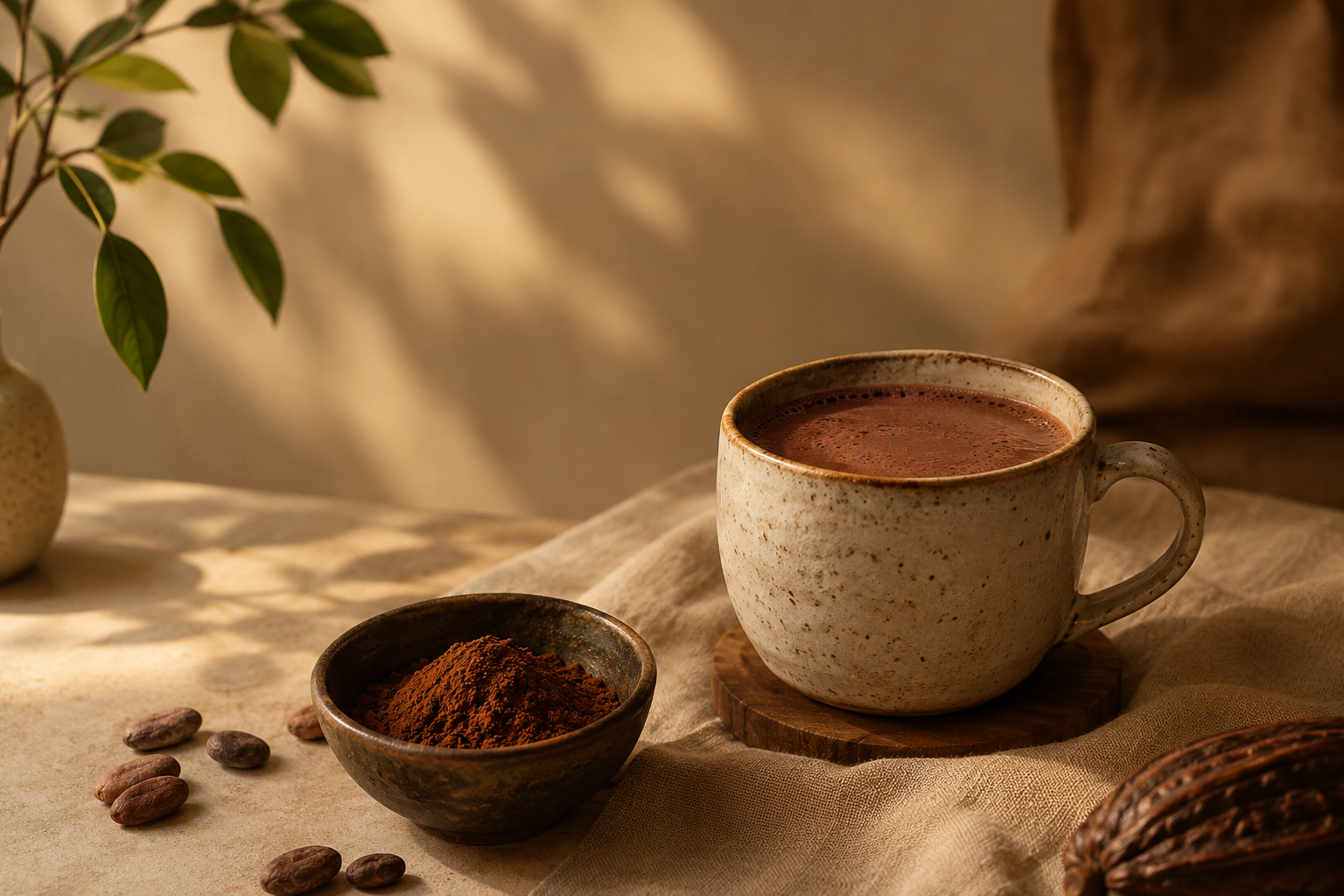
It might seem unusual to consider the cup itself when discussing flavour. Yet the appearance, weight, shape, and material of drinking vessels can influence aspects of the overall sensory experience. A thick ceramic mug might feel different in your hands from a delicate glass cup. The size and shape of the vessel may also influence how you encounter the beverage’s aroma. Researchers have explored how the colour and characteristics of tableware can affect expectations and perceptions of food and drink. However, these effects can depend on the study, the product, and the individual. This does not mean that a particular mug will automatically make cacao taste better. You might simply prefer the familiarity of your favourite ceramic cup. Someone else may enjoy watching the rich colour of cacao through a transparent glass. These small preferences can contribute to the overall experience without necessarily changing the beverage itself.
Why Your Surroundings Might Influence the Experience
Consider drinking cacao while answering work emails, travelling through a crowded city, or sitting at a table with someone whose company you enjoy. The drink might be identical in all three situations, but the experiences surrounding it are quite different. Our attention, expectations, and emotional associations may influence what we notice and remember. A cup shared during an enjoyable conversation might become particularly memorable because of the company rather than the cacao itself. Similarly, a drink consumed while distracted may leave less of an impression. This does not mean that cacao needs to be consumed in a special environment. You might enjoy it just as much while reading, watching a film, or preparing breakfast. The interesting question is whether the circumstances surrounding a drink can become part of how we experience its flavour.
What If You Don’t Enjoy Ceremonial Cacao Immediately?
If you are trying ceremonial cacao for the first time, its flavour may be quite different from what you expect. Many commercial chocolate beverages contain substantial amounts of sugar and other ingredients that create a sweeter taste. Ceremonial cacao is often prepared with relatively few additions, allowing the natural characteristics of the cacao to remain prominent. You might enjoy this immediately, or you may find it too bitter. Both responses are reasonable. If you would like to experiment, you could try preparing a smaller serving with milk, cinnamon, cardamom, or a little sweetener. You may also discover that you prefer a particular cacao origin or a lighter preparation. There is no need to force yourself to enjoy a flavour simply because it is associated with wellness.
Discovering Your Personal Cacao Preferences
The next time you prepare cacao, you might notice whether its flavour seems different from the last time you enjoyed it. Perhaps you find yourself appreciating its bitterness, preferring a creamier texture, or noticing an aroma you had previously overlooked. You do not necessarily need to identify a psychological explanation for every difference. Sometimes, your mood, expectations, surroundings, and sensory preferences may simply come together to create a different experience. And perhaps the most interesting part of exploring cacao is discovering that your favourite way of drinking it does not always have to remain the same. Explore our ceremonial cacao collection and discover your preferred way of enjoying cacao by clicking the image below.