
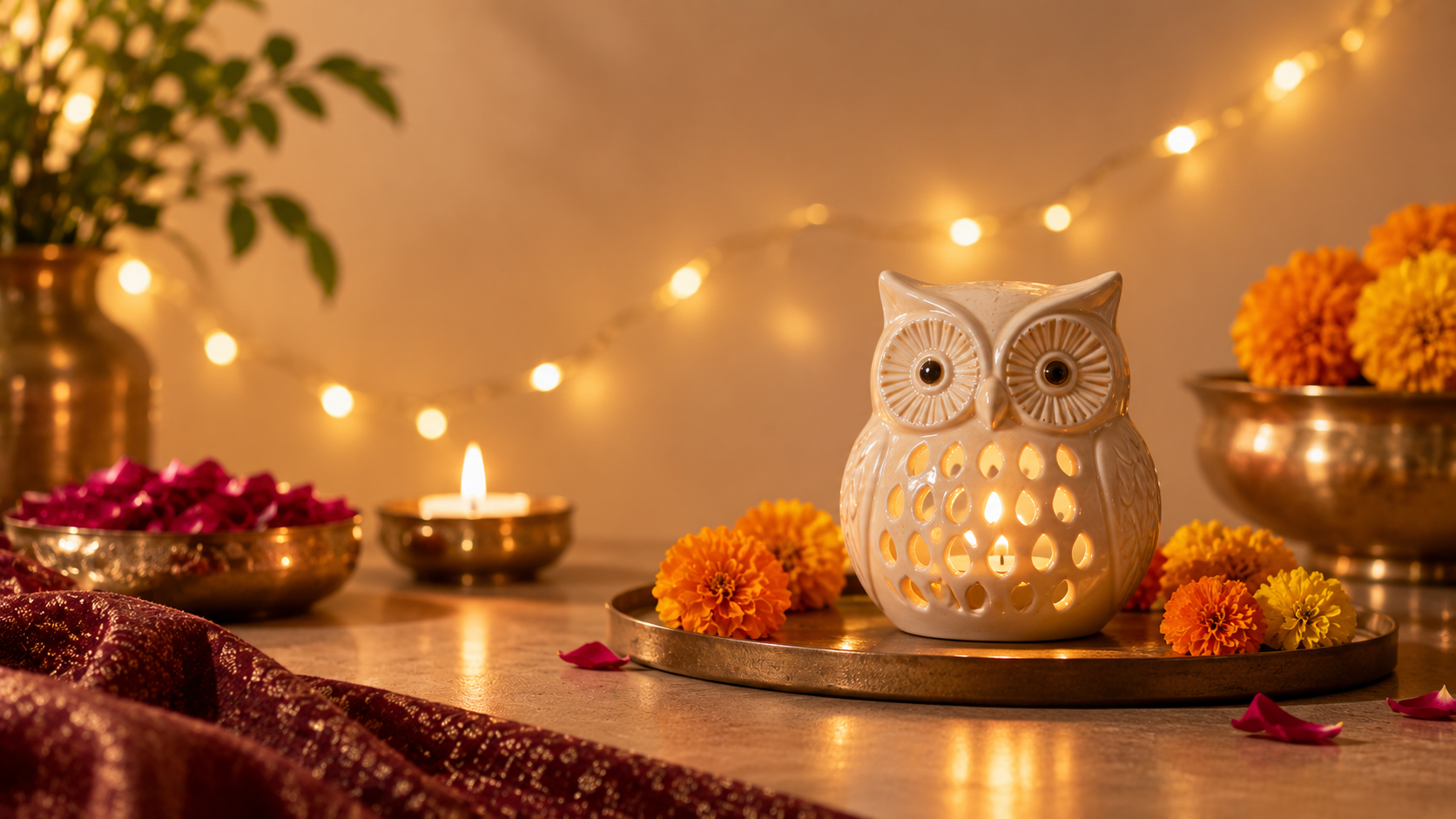
Every year there comes a morning when the festival of lights is over. The sweets are packed away, the guests have gone home and the house can feel a little too quiet. The lamps that glowed at the doorstep for days may now be sitting on a shelf, and the evenings can start to look like any other evening. Many of us feel a gentle dip at this point, and it may be worth naming it instead of pushing past it.
This post is about carrying a small piece of that warmth into ordinary weeknights. You do not need a grand setup or a free afternoon. A single flame, a stick of incense and a few minutes may be enough to remind you that light was never only for the festival.
Festive days tend to fill every hour. There is cooking, cleaning, visiting, dressing up and the steady hum of people around you. When all of it stops at once, the contrast can feel sharp. Some people describe it as a soft sadness, while others feel restless or flat. None of this means something is wrong with you. It may simply be your body and mind adjusting after a stretch of joyful activity.
A festival is a peak, and it can help to treat the days after as a gentle slope instead of a cliff. A small daily ritual can act like a handrail on that slope. It gives the evening a shape when the calendar no longer does.
There is a reason lighting a lamp feels meaningful across so many homes and traditions. A flame is simple and it asks for your attention. When you watch it for a minute, your breathing may slow and your shoulders may drop without any effort. Light at dusk can also signal to the mind that the working part of the day is closing.
A tealight is a humble version of the festival lamp. It is small enough to fit on a windowsill, a kitchen counter or a bedside table. You may find that one tiny flame can do what a whole row of lamps did, because the meaning comes from your attention and not from the number of lights.
A holder can make the moment feel more intentional. When the flame sits inside something you chose, lighting it can feel like a deliberate act and not a passing task. Over time, the holder itself may become a quiet cue that says the evening has begun.
Here is a simple structure you can adapt. Nothing about it is fixed, so change any step that does not suit you.
The aim is not to produce a feeling but to give the feeling a place to arrive if it wants to. Some evenings you may feel nothing in particular, and that can be perfectly fine.
Scent can carry memory in a way few other things can. The smell of incense may bring back the sense of a festive evening, a grandparent’s home or a temple courtyard. When you light a stick alongside your flame, you may find the ritual feels fuller and more rooted.
Place the stick in a stable holder on a safe, flat surface away from curtains and paper. Allow the smoke to rise on its own, and keep a window slightly open if the room is small. You can let the incense act as your timer, sitting while it burns and moving on when it finishes. That small structure may spare you from checking a phone or a clock.
If you share your home with others, you may wish to choose a gentler scent or burn the stick for a shorter time. A good practice is one that fits comfortably into the life you already have.
A ritual can feel hollow when it is copied exactly from someone else. Consider what the festival meant to you and let that guide the details. Perhaps you loved the sound of children laughing in the lane. You may play a soft recording of voices, or you may light the flame while a family member calls. Perhaps you loved the smell of ghee lamps, and you may choose a warm, earthy incense as a nod to that memory.
You may also keep one small object from the festival near your flame, such as a handwritten card, a dried flower or a coin from a relative. When an ordinary evening is lined up beside something that mattered, the ordinary evening can begin to feel a little more sacred.
Some people like to name their ritual. It may be something playful like “the little lamp hour” or something plain like “evening light.” A name can make it easier to return to, since it feels like a small appointment with yourself.
Some evenings the festival will feel like a distant memory and your flame may seem small in a large, tired room. That is a normal part of any practice. You can lower the bar on those days. Light the tealight, take one breath and let that be the whole ritual.
A small act done on a heavy day can matter more than a perfect act done on an easy one. If you miss a night, or a week, you may simply light the flame again without commentary. There is no scoreboard here, and the lamp does not hold a grudge.
If the sadness after a celebration feels heavy or lingers for a long time, it may help to talk with a friend, a family member or a professional. A ritual can be a gentle companion, though it may not be a replacement for support.
Consistency often comes from attaching a new habit to an existing one. You may light your flame right after you wash up from dinner or right after you take off your work shoes. The existing habit can act as a reminder so you do not have to rely on memory.
You might also vary the practice across the week so it stays fresh:
These small differences may keep the ritual from becoming a chore while still keeping it familiar. Over a few weeks you may notice that the evening has its own gentle rhythm, and that the quiet after the festival feels less like an ending and more like a pause.
The festival of lights may end on the calendar, but the idea behind it can stay with you in simple forms. A lit tealight in a holder you love, a curl of incense smoke and a few honest breaths can turn a plain Tuesday into something softer. You may find that the glow was never really in the lamps. It may have been in the act of stopping to notice.
If you would like to begin, you can shop our tealight holders and incense at conscious collective and choose pieces that fit your evenings.

Our offerings—ceremonial cacao, crystals, candles, and journals—are designed to support mindfulness, self-connection, and sacred daily rituals. Every product is ethically sourced, handcrafted with care, and infused with meaning to help you slow down, tune in, and create moments of presence.
© 2025 All rights reserved Conscious Collective

