Most objects in a home eventually wear out, go out of style or simply get replaced by something newer. A japmala may follow a different path. With enough years of use, a mala can become something that carries meaning well beyond its original purpose, eventually passing from one person to another as more than just a string of beads.
An Object Shaped by Repetition
Unlike many possessions, a japmala tends to change through use rather than despite it. The beads may smooth slightly over years of handling. The cord may soften. A particular scent, perhaps sandalwood or rosewood, may fade into something subtler over time, mixed with the trace of hands that have held it thousands of times.
These small changes are not signs of damage. They may be signs of a practice lived through.
This is part of what may make a japmala different from most gifts. A new bracelet or a decorative object can be beautiful the day it arrives, but a mala might only reach its fullest meaning after years of quiet, repeated use.
What is eventually passed down is not simply an object bought once. It may be the residue of a practice, carried in something physical.
Why Passing One Down May Feel Different
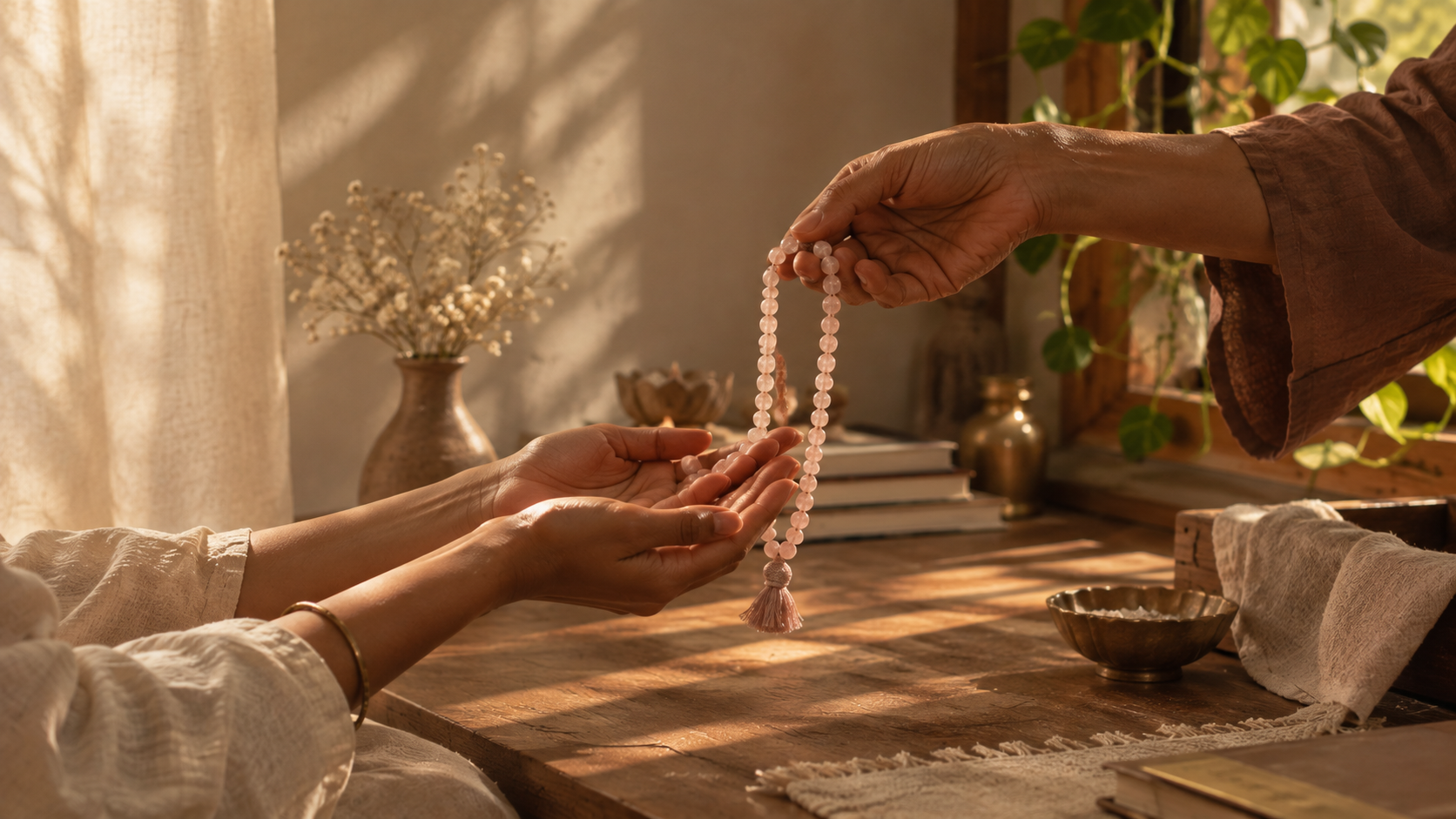
When a mala moves from one person to another, whether from a parent to a child, a teacher to a student or simply between close friends, it may carry a different weight than most possessions.
A new item given as a gift often represents a beginning. A used mala might represent continuity, a way of saying that something is not being started from nothing but instead being handed forward.
For the person receiving it, there may be an added layer of responsibility, even if unspoken. Beads that were once counted by someone else’s thumb are now being counted by their own.
Whether or not this changes anything measurable about the practice, it may change how the practice feels, adding a sense of connection that a brand new mala might not carry in the same way.
The Stories Beads May Hold
Some families or communities develop small traditions around passing down ritual objects. A mala might be given at a significant life moment, such as a milestone birthday, a period of major life change or simply when someone expresses interest in starting a practice.
Others may inherit one only after the original owner has passed away, turning the object into something that also carries memory and grief alongside its everyday function.
There does not need to be a formal story attached for a japmala to carry weight when passed down.
Even a simple explanation, such as this was used every morning for many years, may be enough to shift how the object is perceived by its new owner.
The meaning may not come from an elaborate history. It may come from the accumulated fact of consistent use.
When a Mala Is Not Passed Down by Choice
Not every japmala ends up in the hands of someone who wanted it for its history. Sometimes an inherited object goes to someone who has no interest in continuing the practice attached to it, and that may be perfectly fine.
A mala can also simply become a keepsake, displayed rather than used, its meaning shifting from an active tool to a quiet reminder of the person who once held it.
There is likely no single correct way to treat an inherited mala. Continuing to use it, retiring it as a memory object or even repurposing the beads into something else entirely, such as jewellery, may all be valid ways of honouring what it once represented.
Starting a Mala With the Intention of Passing It On
For those newer to japmala practice, there may be something meaningful in choosing a mala with the thought that it could eventually be passed down, even if that moment is decades away.
This does not require choosing the most expensive or elaborate option available. It may simply mean choosing something made to last, cared for consistently and used with enough regularity that it accumulates its own quiet history over time.
Treating a mala this way from the beginning may change how it is used day to day.
Rather than something disposable or easily replaced, it can become an object approached with a bit more care, knowing that its value might one day extend beyond its original owner.
A Practice That May Outlast the Person Who Started It
Perhaps what makes a japmala worth passing down is not the material it is made from or even the specific tradition attached to it.
It may be the simple fact that a repeated, quiet practice, small motion after small motion, can leave a trace strong enough to be felt by someone who never sat with the original owner at all.
In this way, a mala may do something few objects manage. It may carry a piece of someone’s stillness forward, long after the moments that created it have passed.