Gift giving has always carried meaning beyond the literal object being exchanged. A gift can signal affection, apology, celebration, or hope for someone’s future. When the gift in question is something like ceremonial cacao, a crystal, or a 108-bead japmala, the layers of meaning multiply. These are not ordinary objects picked off a shelf for convenience. They tend to carry histories, spiritual associations, and personal intentions that ask a little more of both the giver and the receiver.
Most gifts serve a functional or aesthetic purpose. A sweater keeps someone warm. A book entertains or informs. Sacred or ritual tools occupy a somewhat different category. Their primary value often lies not in what they do but in what they represent or invite. A japmala invites repetition and reflection. A crystal invites attention to intention or energy, depending on one’s framework. Ceremonial cacao invites slowing down and connecting, whether alone or in the company of others.
Because these objects are tied so closely to practice and intention, gifting one can feel like offering someone an invitation into a particular kind of experience, rather than simply handing over a possession. This can make the gift feel more personal, but it can also raise questions about appropriateness, particularly when the giver and receiver do not share the same spiritual or cultural background.
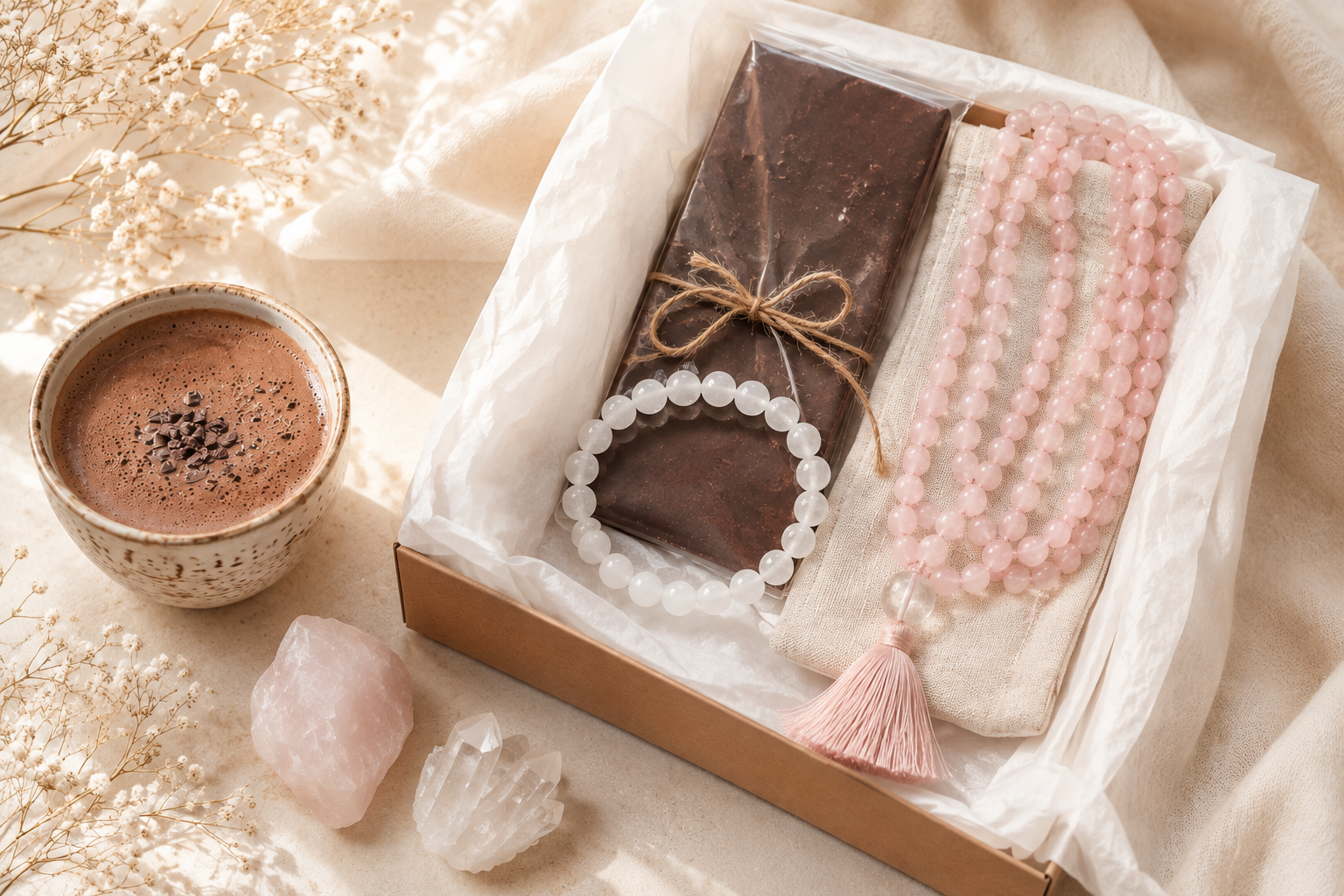
Giving ceremonial cacao often communicates a wish for connection, slowness, or emotional nourishment. Because cacao ceremonies traditionally center around gathering, whether with oneself or with others, gifting cacao can feel like an invitation to create space for reflection or community in the recipient’s life. It might be given to someone going through a period of transition, someone who has expressed interest in mindfulness or ritual practice, or simply someone who could benefit from an excuse to slow down.
Practical considerations matter here as well. Ceremonial cacao is a food product, and like any food gift, it is worth considering any dietary restrictions or health conditions the recipient might have, particularly given cacao’s natural theobromine and caffeine content. Including a small note about how the cacao might be prepared, or offering to share the experience together, can help the recipient feel supported in actually using the gift rather than leaving it unopened in a cupboard.
Healing crystals carry a particularly wide range of meanings depending on the specific stone and the framework through which they are understood. Some traditions and practitioners associate specific stones with particular emotional or energetic qualities, such as Rose Quartz with self-compassion or love, Amethyst with calm or clarity, and Citrine with abundance or confidence. It is worth being transparent that these associations largely stem from folklore, personal practice, and various metaphysical traditions rather than from scientific consensus, and different sources sometimes attribute different meanings to the same stone.
When gifting a crystal, many people choose one based on the qualities they hope to support in the recipient’s life, whether that is calm during a stressful season, courage before a big decision, or simply beauty to be enjoyed on a shelf or desk. Others prefer to let the recipient choose their own stone, recognizing that many practitioners feel a stone should be selected intuitively rather than assigned by someone else. A middle path some gift givers take is offering a small selection of stones and letting the recipient pick the one that feels most resonant to them personally.
The physical qualities of a crystal also carry their own kind of message. A raw, unpolished stone might feel more grounded and natural, while a highly polished or faceted stone might feel more refined and intentional. Size matters too, with a small palm stone feeling appropriate for a pocket or desk while a larger crystal cluster might serve as a home or altar centerpiece.
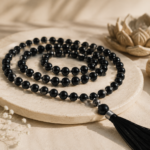
Of the three, a 108-bead japmala may carry the most explicitly spiritual weight, given its direct association with mantra and meditation practice across Hindu, Buddhist, and other traditions. Gifting a mala can be a meaningful gesture toward someone who has expressed interest in meditation or who is beginning a new spiritual or contemplative practice. It might also be given to mark a significant life transition, such as the completion of a training program, a period of grief, or a milestone in someone’s personal growth.
Because malas are traditionally used for repeated physical contact during practice, some practitioners believe the object accumulates a kind of personal energy over time and prefer to select their own rather than receiving one secondhand or pre-selected by another person. Others feel that a mala gifted with genuine care and good intention carries positive energy from the giver, adding to rather than detracting from its value. There is no single correct view here, and preferences often depend on the specific tradition or community the recipient is part of, if any.
Material and bead count matter for those familiar with mala traditions, so a giver who takes time to consider whether rudraksha, sandalwood, or a gemstone japmala feels appropriate for the recipient’s practice may find that additional layer of thought is noticed and appreciated. For someone entirely new to mala practice, a simple explanation of how the beads are traditionally used, perhaps in a short note accompanying the gift, can help the recipient feel more confident about incorporating it into their life rather than treating it as a purely decorative object.
Any time a gift draws on spiritual or cultural traditions outside one’s own background, it is worth approaching the exchange with some humility and awareness. This does not mean these items cannot be shared across cultures, since many traditions have a long history of exchange, adaptation, and mutual influence. It does mean that a giver might benefit from learning a little about the origins and traditional uses of an item before presenting it, so that the gift can be offered with genuine understanding rather than as a purely aesthetic or trendy object stripped of its original context.
A short explanation accompanying the gift, whether written or spoken, can go a long way. Sharing where a mala tradition originates, why ceremonial cacao has held cultural significance in certain communities, or what a particular crystal is traditionally associated with allows the recipient to receive not just the object but also a small piece of the story behind it. This can deepen the meaning of the gift considerably compared to simply handing over an item without context.
The appropriateness of these kinds of gifts often depends heavily on the nature of the relationship between giver and recipient. A close friend who has expressed genuine interest in meditation or ritual practice may welcome a japmala or ceremonial cacao warmly. A more distant acquaintance or colleague might find such a gift confusing or overly personal if there has been no prior conversation about spiritual interests. Reading the relationship accurately, and perhaps asking a few gentle questions beforehand if there is any uncertainty, can help ensure the gift lands as intended rather than creating awkwardness.
For those unsure where to start, pairing a smaller or more approachable version of these gifts with a thoughtful note explaining the intention behind the choice can soften any uncertainty. A single tealight alongside a small piece of ceremonial cacao, for instance, might feel like a gentle, low-pressure introduction to ritual practice for someone who has expressed curiosity but has not yet explored these traditions directly.
What ultimately distinguishes gifts like ceremonial cacao, crystals, and japmalas from more conventional presents is the invitation they extend. Each one asks the recipient to slow down, whether for a few minutes of mantra practice, a moment of reflection while holding a crystal, or a shared cup of ceremonial cacao prepared with care. A thoughtful giver recognizes that the true gift may not be the object itself but the pause, connection, or intention it makes possible.
If you are looking for a meaningful gift, explore our collection of ceremonial cacao, authentic crystal bracelets, healing crystals, and 108-bead japmalas. Each piece is thoughtfully selected to support mindfulness, intentional living, and meaningful rituals for yourself or someone you love.

Our offerings—ceremonial cacao, crystals, candles, and journals—are designed to support mindfulness, self-connection, and sacred daily rituals. Every product is ethically sourced, handcrafted with care, and infused with meaning to help you slow down, tune in, and create moments of presence.
© 2025 All rights reserved Conscious Collective