It is easy to think of an incense holder as a small, practical object. Something to catch the ash. Something to keep a stick upright. But the shape, weight and placement of a holder may quietly influence how a ritual actually unfolds. The stick may be what burns, but the holder may be what gives the moment its form.
When we think about ritual, we often focus on the things that seem more meaningful. The incense itself, the scent filling the room, the words we repeat, the meditation that follows or the intention we bring into the moment. Yet rituals are also made up of smaller details. The objects we reach for, the way we arrange them and the spaces we create around them can all become part of the experience.
An incense holder occupies a particularly interesting place within this process. It is functional, but it can also be beautiful. It holds something that is temporary while remaining behind long after the smoke disappears. With repeated use, it can become familiar enough that simply seeing it may remind us of the moments we have created around it.
The Object That Sets the Stage
Before the incense is even lit, the holder is often the first thing touched. Picking it up, placing it on a shelf or table, deciding where it will sit in the room can all be small acts of preparation. This brief handling may already begin to shift attention away from whatever came before. In this sense, the holder may function less like a tool and more like a small threshold that a person crosses on the way into a quieter state.
A holder that has to be sought out, dusted off or carried from another room may add a few extra seconds of intention to the process. Those seconds are not wasted time. They may be part of what separates a ritual from a habit done on autopilot.
There is something different about deliberately preparing an object compared with simply reaching for something because it is convenient. The small movement of clearing a surface, placing the holder down and preparing the incense can create a natural pause between one activity and another.
This is especially relevant when incense is used at transition points. Lighting it after closing a laptop, before beginning meditation or at the end of the day can give the moment a physical beginning. Instead of simply deciding that it is time to slow down, there is something tangible that marks the transition.
Shape and the Feeling It Creates
Incense holders come in many forms and each one may create a slightly different atmosphere.
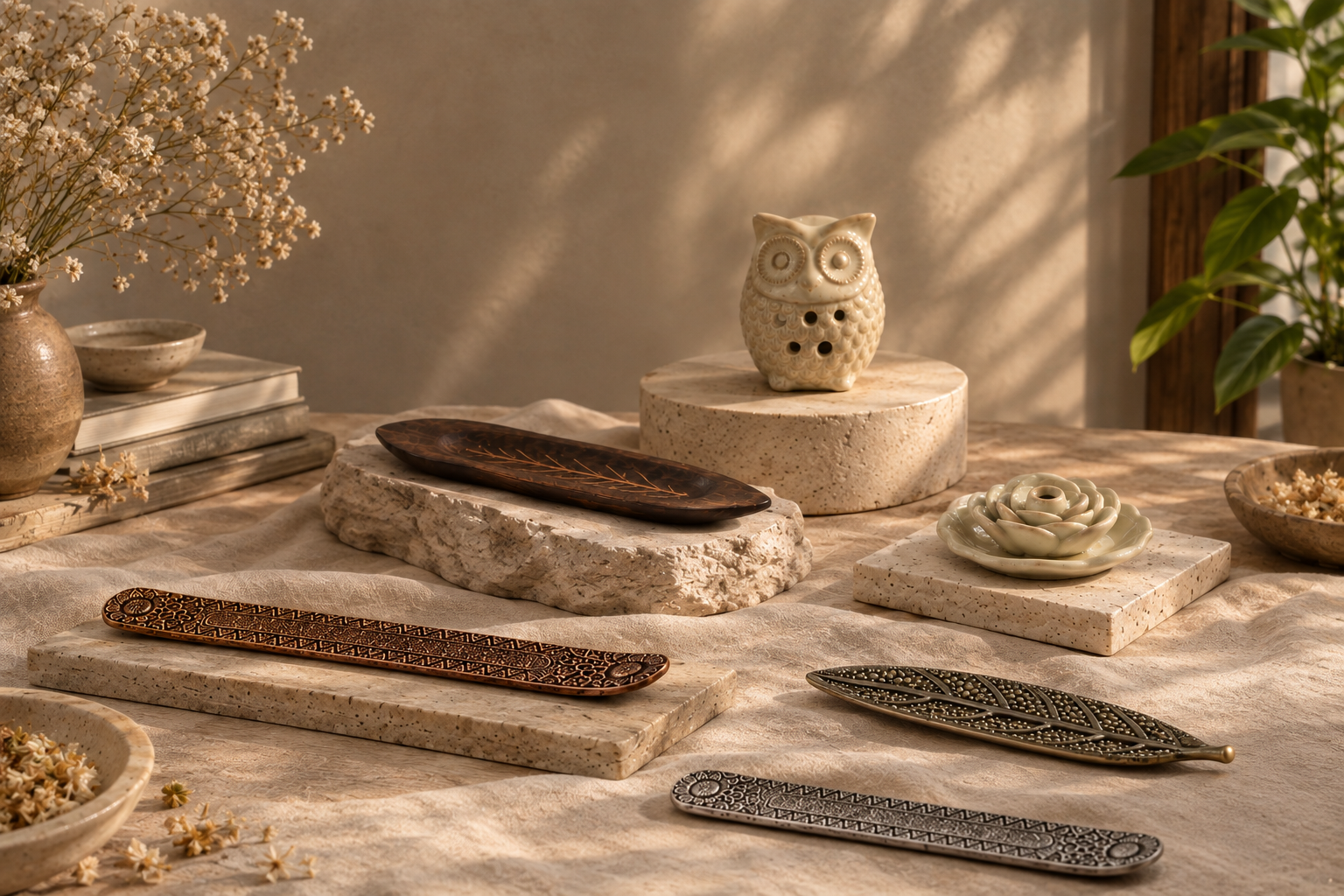
Flat and minimal holders tend to sit quietly in the background. They may suit a space that already feels calm and does not need an additional visual anchor. The simplicity can allow the smoke itself to become the focal point.
Sculptural or symbolic holders, such as those shaped like a lotus, a mountain or an animal, may add a layer of meaning to the ritual. Some people find that having a symbol nearby, even one they do not consciously think about, can reinforce the feeling of the practice being separate from ordinary daily objects.
Bowl style holders that catch the ash may encourage a longer sit, since there is less concern about mess and more freedom to simply let the stick burn undisturbed. This can be helpful for people who want the ritual to feel unhurried.
There are also holders designed to be visually expressive, becoming part of the décor even when they are not being used. A handcrafted ceramic piece, a wooden holder or an oxidised metal design can introduce texture and character into a room without needing to dominate it.
None of these shapes is inherently better than another. What may matter more is whether the object feels right in the hand and in the space, since a holder that feels ill fitting can become a small irritation rather than a source of calm.
The practical details matter too. Stability, ease of cleaning and the ability to safely contain ash are worth considering alongside appearance. A beautiful object is much more likely to become part of a ritual when it is also easy to use.
Placement as Part of the Practice
Where a holder sits in a home may say something about how the ritual is used. A holder kept on a bedside table might be reached for at the end of a long day, becoming part of a wind down practice. One placed near a workspace could be lit before starting a task that requires focus, using the scent as a marker for beginning. A holder near a window may connect the ritual to the movement of air and light throughout the day.
Some people like to keep the holder in the same place at all times so the object itself becomes a kind of landmark within the home, something the eye passes over often and eventually associates with stillness. Others prefer to move it seasonally, letting its placement shift as their needs shift.
Placement can also determine how easily a ritual becomes part of everyday life. If the incense holder is tucked away inside a cupboard, using it requires an additional decision. If it sits somewhere visible and intentional, the practice may feel easier to return to.
This does not mean that an incense holder needs to be permanently displayed. For some people, taking it out only when they need a moment of quiet may be precisely what gives the object significance. The act of bringing it into the space can itself become part of the ritual.
The Weight of Something Solid
A heavier holder, often made from stone, clay or metal, may bring a different quality to a ritual than a light plastic or thin wooden one. There can be something grounding about lifting or setting down an object that has real heft to it. This weight may act almost like an anchor, something that reminds the hand and by extension the mind that this moment has substance.
There is also something sensory about holding an object with texture and weight. Smooth stone feels different from rough clay. Cool metal feels different from warm wood. These small sensory details can make an otherwise familiar action feel more deliberate.
Lighter holders are not without their own value. They may travel more easily, making it possible to carry a small ritual practice into a hotel room or a friend’s home. For people who move often or who like to bring their practice with them, portability may matter more than weight.
The best material is therefore not necessarily the most traditional or expensive one. It is the one that works naturally with the way a person actually lives and practices.
Choosing a Holder That Fits the Practice, Not Just the Room
It can be tempting to choose an incense holder purely on how it looks on a shelf. There is nothing wrong with aesthetics playing a role, since a beautiful object may be more inviting to use regularly. But it may help to also consider how the holder will be used day to day.
A holder that requires careful cleaning after every stick may become a small obstacle for someone who wants a quick and simple evening practice. A holder that is too delicate to be moved around may not suit someone who likes to shift their ritual space depending on mood.
The size of the holder can matter too. Someone who burns incense occasionally may prefer a compact piece that takes up very little space. Someone who regularly creates a dedicated ritual corner may want an object that feels more substantial within the arrangement.
Safety and practicality should also remain part of the decision. The holder should be stable and suitable for the type of incense being used, with the burning material and ash properly contained. A ritual is easier to settle into when there is no constant worry about whether something might tip over or leave ash across the surface.
Choosing something that can be picked up without a second thought, something that feels natural to reach for, may matter more in the long run than choosing the most visually striking piece available.
Creating a Ritual Corner
An incense holder does not have to exist on its own. It can become part of a small ritual corner that brings together a few objects that feel personally meaningful.
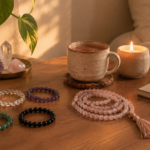
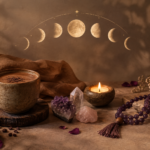
This might be a candle, a crystal bracelet, a japmala, a small bowl or simply a clean surface with enough space to sit comfortably for a few minutes. The purpose is not to create an elaborate altar or recreate someone else’s practice. It is simply to create a visual reminder that this space can be used for slowing down.
Keeping the arrangement simple can sometimes make it easier to return to. Too many objects may turn the ritual into another thing to organise. A few carefully chosen pieces can be enough.
The incense holder can become the centre of this small space because it is both functional and visible. Each time it is used, the surrounding objects become familiar too, creating a sense of continuity.
An Object That Holds More Than Ash
Over time, a well used incense holder may start to carry a kind of quiet history. The faint marks left by melted wax or ash, the slight change in colour from repeated use, can become small traces of every sitting that came before. In this way, the holder may become less of an accessory and more of a companion to the practice itself, something that has witnessed each pause taken in front of it.
There is something meaningful about objects that are allowed to show evidence of being used. In a world where so many things are replaced as soon as they become imperfect, a small mark or change in texture can instead become part of an object’s story.
A stick of incense burns down in minutes, but the object that holds it can remain part of daily life for years. The holder may not be the most obvious part of a ritual, yet it can shape the whole experience, from the moment it is reached for to the quiet after the smoke has cleared.
Perhaps that is what makes an incense holder more than a stand. It does not need to perform the ritual for us. It simply gives the ritual somewhere to begin, somewhere to be held and somewhere to return to.
And sometimes, the objects we return to again and again become quiet reminders that we are allowed to pause.