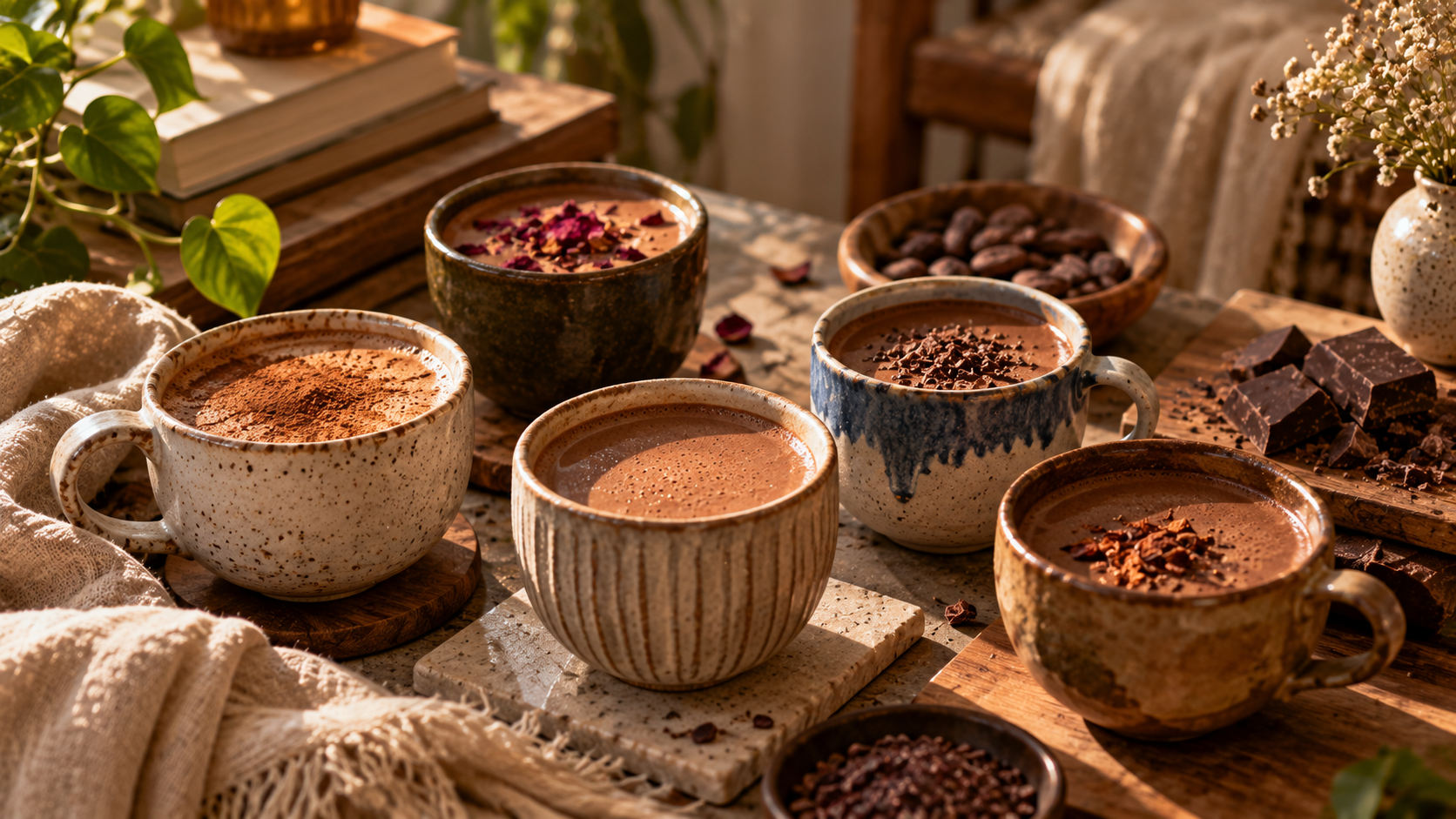
Have you ever prepared two cups of cacao using the same recipe, only to notice that they taste surprisingly different? One might have a deep, earthy flavour with a lingering bitterness, while another could taste slightly fruity, nutty, or even floral. Sometimes, the difference might be subtle enough that you cannot quite put it into words. Much like coffee or tea, cacao can have its own flavour characteristics depending on where it comes from, how it is grown, and what happens to the beans before they reach your kitchen. When we think about ceremonial cacao, we often focus on the experience of drinking it. But there is another interesting side to cacao that does not always receive as much attention: its extraordinary diversity. Behind every cup is a combination of geography, farming practices, processing methods, and personal preferences. Understanding these differences might help you appreciate cacao in an entirely new way.
Cacao is grown in several tropical regions around the world, including parts of Central and South America, Africa, and Asia. Although cacao beans may look relatively similar, their flavour profiles can vary considerably. The climate, soil, rainfall, growing conditions, and genetic characteristics of the cacao trees can all influence the beans that are eventually harvested. For example, cacao grown in one region might develop fruity or floral flavour notes, while cacao from another location may have a more pronounced earthy or nutty character. These differences are sometimes discussed through the concept of terroir, a term commonly associated with wine. Terroir refers to the environmental conditions that may contribute to the characteristics of an agricultural product. However, geography alone does not determine how cacao will taste. The variety of cacao, the way it is harvested, and the methods used to process it can be equally important. Two producers working in the same region might create cacao with noticeably different flavour profiles. This means that exploring cacao from different origins can be a little like discovering different cuisines. The same ingredient may offer a wide range of experiences depending on how it is grown and prepared.
The flavour of cacao does not develop entirely while the beans are growing. After harvesting, cacao beans typically undergo several processing stages that can influence their final taste. One particularly important stage is fermentation. Fresh cacao beans are surrounded by a sweet, white pulp. During fermentation, naturally occurring microorganisms break down sugars in the pulp, producing heat and various compounds that contribute to the development of cacao’s flavour. The duration and conditions of fermentation can influence the characteristics of the beans. Insufficient fermentation may leave certain flavours underdeveloped, while different fermentation conditions can produce distinct results. The beans are then dried to reduce their moisture content and prepare them for storage and further processing. Depending on the producer, cacao may also be roasted at different temperatures or processed using methods intended to preserve particular flavour characteristics. Each stage can influence the final product. This is one reason two varieties of ceremonial cacao might taste different even when they come from similar growing regions.
If you are accustomed to sweetened drinking chocolate, your first experience with ceremonial cacao might come as a surprise. Without the substantial amounts of added sugar found in many commercial chocolate drinks, cacao’s natural bitterness may become much more noticeable. However, bitterness is only one part of its flavour. Depending on the cacao and its processing, you might notice subtle hints of dried fruit, nuts, spices, or even citrus. These descriptions do not necessarily mean that the cacao contains those ingredients. Instead, they refer to flavour notes that people may recognise when tasting it. Some varieties might have a more intense, lingering bitterness, while others may feel comparatively mild. Your own preferences can also influence which flavours you notice. Someone who enjoys dark chocolate might appreciate cacao with a particularly strong flavour, while another person may prefer something smoother and less bitter. Neither preference is necessarily better. Exploring these differences can make choosing cacao feel more personal rather than simply looking for the strongest or most expensive variety.
Even when you use the same cacao, the way you prepare it can make a noticeable difference. The amount of water or milk you add may influence its thickness and intensity. A more concentrated preparation might have a richer flavour, while a lighter preparation could feel easier to drink. Temperature may also influence how we perceive flavour and aroma. A very hot cup of cacao might taste different from the same preparation after it has cooled slightly. You may notice that certain flavours become more apparent as the temperature changes. The ingredients you choose to add can create further variations. Cinnamon might introduce warmth, cardamom could contribute a fragrant note, and a small amount of sweetener may soften the perception of bitterness. Plant-based milk or dairy milk can also change the texture and overall flavour. These additions do not necessarily take away from the experience of drinking cacao. They simply create different ways of enjoying it. If you are curious about the natural flavour of a particular cacao, you might begin by tasting a small amount prepared with water before experimenting with additional ingredients.
When describing cacao, we tend to focus on flavour, but texture can be equally interesting. Ceremonial cacao is often made from whole cacao beans processed into a paste that retains much of the beans’ natural cacao butter. This can give the drink a richer mouthfeel than beverages prepared using highly defatted cocoa powder. Depending on the cacao, preparation method, and amount of liquid used, your cup might feel thick and velvety or comparatively light. Some people enjoy a rich, almost chocolate-like consistency, while others prefer a thinner beverage. The way cacao is mixed can also influence its texture. Whisking or blending may help disperse the cacao more evenly throughout the liquid, creating a smoother drink. You might find that texture becomes an important consideration when deciding which cacao you enjoy most. A variety with an intense flavour may be appealing on some occasions, while a milder preparation might suit your preferences at other times.
Taste is a remarkably personal experience. The cacao that one person describes as beautifully rich might seem excessively bitter to someone else. Our preferences can be shaped by the foods we grew up eating, the flavours we regularly encounter, and the experiences we associate with particular ingredients. Someone accustomed to very sweet chocolate drinks might initially find unsweetened cacao challenging. Over time, they may begin to appreciate its more complex flavours, although this is not something everyone will necessarily experience. Other people may continue to prefer cacao prepared with milk, spices, or a little sweetness. There is no requirement to develop a preference for the most intense or bitter cacao. You might also notice that your preferences change depending on what you have eaten or what you feel like drinking on a particular day. A cacao that seems appealing one morning may not be what you want the following afternoon. Rather than searching for one universally perfect cup, it may be more enjoyable to discover the preparations and flavour profiles that suit you.
Sometimes, our enjoyment of a drink extends beyond its ingredients. You might remember a particular cup of cacao because it was shared with a friend, prepared during a holiday, or served at a café you loved. The surrounding experience can become part of the way you remember its flavour. This may help explain why recreating a memorable drink at home does not always produce quite the same experience. The cacao might be identical, but the setting, company, and expectations are different. That does not mean one experience is more authentic than another. It simply suggests that our appreciation of food and drink can involve much more than taste alone.
There is no single flavour that every cup of ceremonial cacao needs to have. Some varieties may be bold and earthy, while others might offer delicate fruity notes or a smoother finish. Learning about the origins and processing of cacao can help you understand these differences, but your personal preferences are just as important. You might enjoy experimenting with different preparations, noticing subtle flavour variations, or discovering how the same cacao tastes when paired with different ingredients. And perhaps, after trying several varieties, you will find yourself returning to one particular cup simply because you enjoy it. Explore our ceremonial cacao collection and discover a cup that suits your taste by clicking the image below.

Our offerings—ceremonial cacao, crystals, candles, and journals—are designed to support mindfulness, self-connection, and sacred daily rituals. Every product is ethically sourced, handcrafted with care, and infused with meaning to help you slow down, tune in, and create moments of presence.
© 2025 All rights reserved Conscious Collective