There might be a bracelet sitting in your drawer that you have not worn in years. Perhaps its elastic has stretched, its colour no longer matches your style, or you simply prefer other accessories now. Yet every time you consider giving it away, something makes you put it back. It may not be particularly expensive or rare. In fact, someone else might look at it and wonder why you have kept it for so long. But to you, it might represent a friendship, a memorable trip, a meaningful gift, or a version of yourself you still feel connected to. Why do certain objects become so difficult to part with, even when they no longer serve a practical purpose? Our relationships with possessions can be surprisingly complicated. Sometimes, the things we keep may tell us more about our experiences than about our material preferences.
Most of the things we own have a practical purpose. We purchase clothes to wear, mugs to drink from, and jewellery because we enjoy how it looks. But some objects gradually acquire meanings that extend beyond their original function. A crystal bracelet might begin as an accessory and eventually become a reminder of someone who gifted it to you. A ceramic mug may remind you of the apartment where you first lived independently. A japmala might become associated with a family member who owned it before you. These associations can make otherwise ordinary possessions feel irreplaceable. Even when an identical object is available to purchase, it may not carry the same memories. This might be why replacing a lost sentimental possession can feel different from replacing something purely functional. The material object may be relatively easy to reproduce, but the personal history attached to it is not.
Have you ever kept a gift you no longer use simply because someone important gave it to you? Perhaps you received a crystal bracelet from a close friend several years ago. Your tastes have changed since then, but the bracelet still reminds you of the thoughtfulness behind the gesture. Getting rid of it might feel as though you are somehow dismissing that affection. Gifts can carry a sense of connection between the person who gives them and the person who receives them. We may associate the object with the relationship itself, even when the person who gifted it would have no objection to us passing it along. Sometimes, this can create an unexpected feeling of obligation. You might keep something because you genuinely love it, or because you worry that letting it go would make you seem ungrateful. These are two different experiences, although they can be difficult to distinguish. It may be helpful to remember that appreciating a gesture does not necessarily require keeping the physical gift forever. You can value the kindness behind an object even if you eventually decide that it no longer belongs in your home.
Some possessions may represent particular stages of our lives. Perhaps you purchased a crystal during your first solo trip, wore a bracelet throughout university, or bought a japmala when you were exploring a new personal interest. Years later, the object might no longer fit into your everyday life. But it may still remind you of the person you were when you first acquired it. Letting go of such possessions can sometimes feel like letting go of a previous version of ourselves. This may be especially noticeable during significant transitions, such as moving to a new city, changing careers, or leaving a long-term relationship. Objects associated with those experiences might become physical reminders of a time that has already passed. Keeping them may offer a sense of continuity between our past and present. However, not everyone experiences sentimental attachment in the same way. Some people prefer preserving objects from different life stages, while others find it easier to keep memories through photographs, writing, or conversations. Neither approach necessarily reflects how deeply someone values their experiences.
Not every object we struggle to discard is associated with a happy memory. You might own something that reminds you of a difficult relationship, an abandoned ambition, or a period of life you would rather not revisit. Yet you may still find yourself holding on to it. Sometimes, objects can represent unfinished stories. A bracelet purchased during a relationship might remain in a drawer long after the relationship has ended. A journal that was never completed may remind someone of plans they once hoped to pursue. Keeping these objects does not necessarily mean that we want to return to the past. We may simply be uncertain about what parting with them would represent. In other situations, practical considerations might be involved. We may hesitate to discard something expensive because we remember how much we paid for it. The possibility that we might use it again someday can also influence our decisions. Understanding these different reasons may help us make more thoughtful choices about what we keep.
Modern conversations about organising our homes often focus on practicality. We may be encouraged to discard anything we have not used recently or anything that does not serve a clear purpose. While these approaches can be helpful, they might not account for the sentimental value of certain possessions. A crystal displayed on a shelf may have no practical function beyond being something you enjoy looking at. An old japmala might no longer be used regularly but could still hold considerable personal significance. A small incense holder may remind you of a place you once visited. These objects do not necessarily need to justify their presence through frequent use. Sometimes, enjoyment, memory, or personal meaning may be sufficient reasons to keep something. The important distinction might be whether you genuinely want the object or feel obligated to hold on to it. A home filled with meaningful possessions can feel very different from a home filled with things we are afraid to discard.
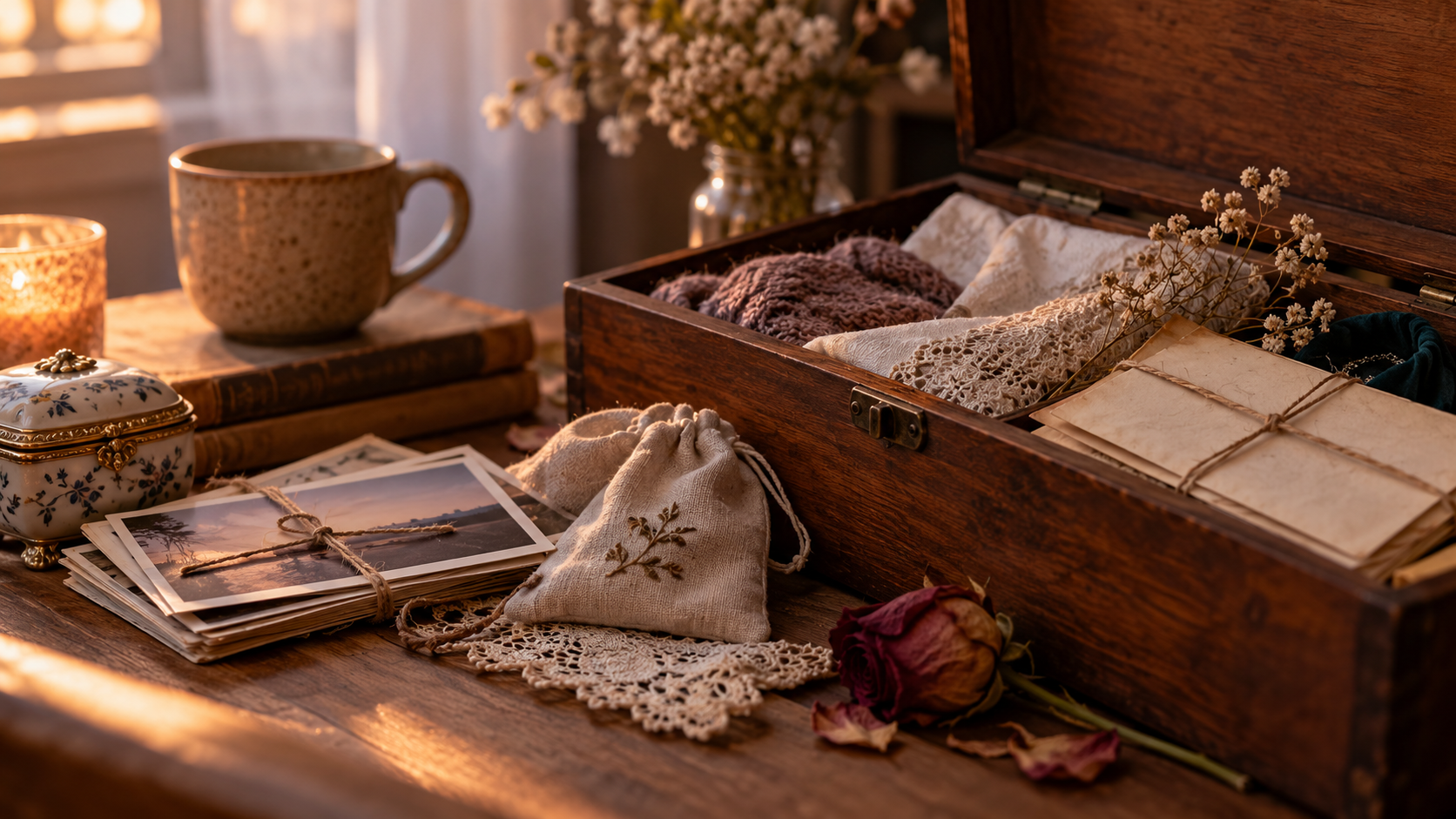
Sentimental attachment can be beautiful, but it may also become complicated when almost every possession begins to feel irreplaceable. You might find yourself storing broken accessories, old packaging, unused gifts, and objects associated with experiences you have not thought about in years. Over time, the number of things you own may become difficult to manage. This does not necessarily mean that your attachment to those objects is unreasonable. However, it might be worth considering whether keeping every physical reminder is the only way to preserve an experience. Some people find it helpful to photograph sentimental objects before giving them away. Others prefer selecting a few meaningful possessions that represent a particular person or period. You might choose to repair an old bracelet, repurpose a decorative object, or pass something on to someone who would genuinely enjoy it. There is no universal rule for deciding what deserves to stay.
We sometimes imagine that the significance of a possession disappears when we no longer own it. But memories do not necessarily depend on the continued presence of a physical object. You might give away a bracelet and still remember the friend who gifted it to you. You may donate a collection of books without forgetting the stories that influenced you. In some cases, passing an object along might even create a new meaning. A crystal bracelet you no longer wear could become a treasured accessory for someone else. An unused incense holder might find a place in another person’s home. Of course, not every sentimental possession needs to be given away. Some objects may remain meaningful throughout our lives. The decision can be personal rather than something determined by a particular organising philosophy.
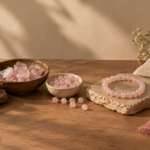
The next time you find yourself holding an object you cannot quite part with, you might consider what it represents. Do you enjoy owning it today, or are you holding on to a memory associated with it? Does it bring you happiness, or does keeping it feel more like an obligation? You do not necessarily need an immediate answer. Some possessions may deserve a permanent place in your life, while others might gradually become easier to release. And sometimes, a simple bracelet or an old mug may continue to matter precisely because it carries a story that belongs entirely to you. Explore our collection of crystal bracelets, japmalas, and thoughtfully chosen objects by clicking the image below.

Our offerings—ceremonial cacao, crystals, candles, and journals—are designed to support mindfulness, self-connection, and sacred daily rituals. Every product is ethically sourced, handcrafted with care, and infused with meaning to help you slow down, tune in, and create moments of presence.
© 2025 All rights reserved Conscious Collective