Introduction: The Body Knows Before the Mind Does
In somatic therapy and body-centered healing modalities, one of the foundational principles is that the body may hold and process experiences including stress, trauma, and emotional pain in ways that precede and often bypass conscious understanding. The body may remember what the mind has forgotten, and healing often happens not through insight alone, but through direct, present-moment engagement with physical sensation.
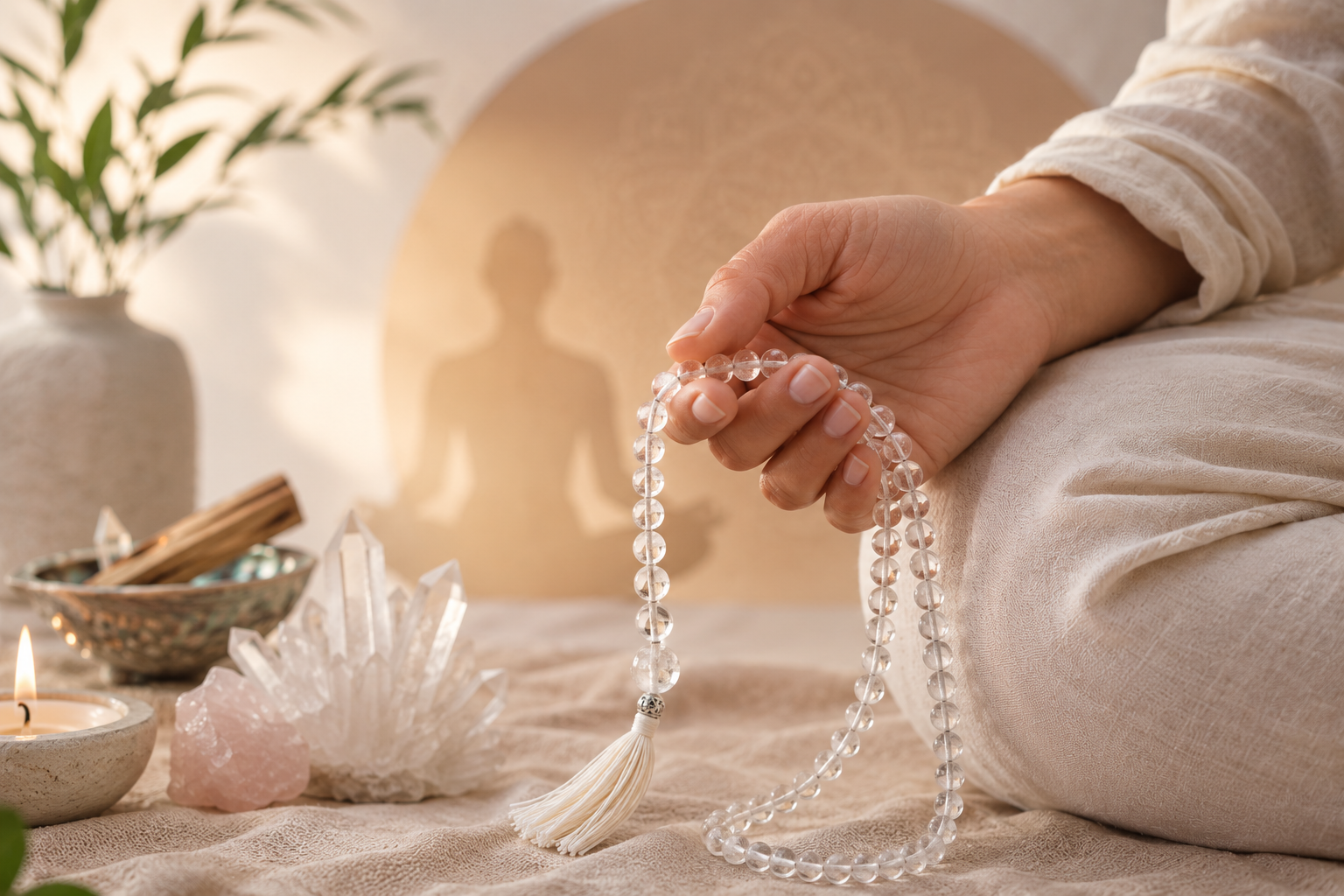
Within this framework, the japmala a string of 108 beads traditionally used in Hindu, Buddhist, and Yogic practice may function as far more than a spiritual or religious tool. From a somatic perspective, a japmala might serve as a powerful tactile anchor: a physical object that engages the nervous system, grounds attention in the body, and provides a reliable bridge back to the present moment when the mind has drifted into anxiety, rumination, or dissociation.
What Is Somatic Anchoring and Why Does It Matter?
Somatic anchoring refers to the use of specific physical sensations, objects, movements, or practices to help regulate the nervous system and maintain a connection to present-moment embodied experience. In somatic approaches to trauma and stress including Somatic Experiencing (developed by Dr. Peter Levine), Sensorimotor Psychotherapy, and various body-based mindfulness practices anchors may play a crucial role in supporting nervous system regulation, particularly for those whose window of tolerance has been narrowed by chronic stress, trauma, or anxiety.
A reliable somatic anchor might be a specific breath pattern, a particular physical posture, a grounding movement, or as in the case of the japmala a consistent tactile experience. The key quality of an effective somatic anchor is its ability to reliably call the nervous system back from a state of hyperactivation or hypoactivation into a regulated, present-moment state.
The japmala may be particularly well-suited to serve as a somatic anchor because of the combination of qualities it offers: consistent texture, rhythmic movement, a defined beginning and end (which may support a sense of structure and predictability), and for many practitioners a deep personal or cultural significance that may amplify its regulatory power.
The Hands as a Site of Somatic Intelligence
In somatic psychology and neuroscience, the hands are recognized as sites of extraordinary sensory and motor intelligence. The hands contain a disproportionately large representation in the somatosensory cortex the region of the brain that processes tactile information reflecting the evolutionary and developmental significance of manual dexterity and touch.
The fingertips in particular are among the most densely innervated areas of the body, containing a remarkable concentration of Meissner’s corpuscles (sensitive to light touch and texture), Pacinian corpuscles (sensitive to vibration and deep pressure), and Merkel discs (sensitive to fine detail and pressure). This sensory richness means that the hands may be capable of extraordinary subtlety in perceiving and responding to tactile information.
When you move your fingers across the beads of a japmala feeling the weight, texture, temperature, and roundness of each bead you may be engaging this rich network of sensory intelligence in a way that could send calming, regulatory signals through the nervous system. This is not merely a metaphor; it may reflect actual neurophysiological pathways through which tactile engagement supports autonomic regulation.
Rhythm, Repetition, and the Window of Tolerance
From a somatic perspective, the rhythmic repetition involved in moving through a japmala may be among its most therapeutically significant qualities. Rhythm in movement, sound, touch, and breath appears to have a fundamental regulatory effect on the nervous system that may operate independently of cognitive meaning or understanding.
The developmental roots of this relationship between rhythm and regulation may be found in early childhood experiences of being rocked, soothed with rhythmic sound, or nursed in a regular pattern. These early rhythmic experiences may help establish the neural templates for self-regulation that carry through into adult life. Rhythmic practices in adulthood including walking, rocking, humming, drumming, and repetitive tactile movement may reactivate these regulatory templates, helping to widen the window of tolerance and reduce the overall reactivity of the nervous system.
A regular japmala practice may gradually expand this window of tolerance over time not just during the practice itself, but as an accumulated effect that supports greater resilience, emotional flexibility, and capacity for present-moment awareness in daily life.
Working with the Japmala in Somatic Practice
For those interested in using the japmala as a somatic tool whether in formal therapeutic work, self-care practice, or as a complement to existing mindfulness or movement practices a few practical approaches may be worth exploring.
One approach involves using the japmala as a grounding resource during moments of heightened anxiety or stress. Rather than waiting for a full meditation session, simply picking up the japmala, feeling its weight in the hands, and slowly moving through a few beads while taking slow, deep breaths may help activate the parasympathetic nervous system and return attention to the body and the present moment.
Another approach involves pairing japmala practice with a body scan moving through the beads while systematically bringing gentle, curious attention to different areas of the body, noticing sensations without judgment. This combination of tactile engagement and interoceptive awareness may deepen the regulatory benefits of the practice and support the development of greater body awareness over time.
Bring Somatic Intelligence Into Your Daily Practice
Bring somatic intelligence into your daily practice with the conscious collective’s handcrafted japmalas. Each bead is an invitation to return to your body, your breath, and the present moment. Explore our collection today.