There is something quietly remarkable about a tealight candle. It costs little, it fits in the palm of a hand, and it burns for only a few hours. Yet across centuries and cultures, small flames like these have held an outsized place in ritual and reflection. People have gathered around candlelight to pray, to grieve, to celebrate, and to simply pause. The tealight, unassuming as it seems, may be one of the most accessible tools for building a personal practice.
Fire has occupied a strange place in the human mind since long before recorded history. Early humans depended on fire for warmth, protection, and food, so it makes sense that the sight of flame might still register somewhere in the nervous system as a signal of safety and gathering. When a tealight is lit in a quiet room, the body may respond before the mind has consciously processed anything at all. The shoulders might drop. The breath might slow. A subtle shift toward stillness can begin without any deliberate effort.
Some researchers who study attention and mindfulness point to the flickering, unpredictable movement of a flame as a kind of natural focal point. Unlike a screen or a fixed object, a flame never repeats itself exactly. Watching it can occupy just enough of the mind’s attention to quiet the noisier, more anxious thought patterns that tend to surface in silence. This may be part of why candle gazing, sometimes called trataka in some meditation traditions, has persisted as a practice for so long.
Any practice, whether it involves meditation, journaling, prayer, or simple reflection, tends to benefit from a consistent marker that signals the beginning and end of that time. Without such a marker, the mind may struggle to distinguish “ordinary time” from “practice time.” A tealight can serve this function beautifully. Lighting the candle becomes the threshold. Blowing it out, or watching it burn down naturally, becomes the closing.
This kind of bookending appears often in habit formation research. A small, repeated cue paired with an intentional action can help the brain build an association over time. Eventually, simply reaching for a lighter or match might begin to trigger a felt sense of settling in, even before the flame catches. The ritual becomes less about the object itself and more about what the object has come to represent.
Compared to larger pillar candles or elaborate ritual objects, tealights offer a few practical advantages worth considering. Their burn time is short, often between two and four hours, which can make them well suited to a single sitting of meditation, journaling, or quiet reflection without requiring the practitioner to remember to extinguish anything hours later. Their small size means they can be arranged in clusters, placed on an altar, floated in water, or tucked into a travel bag for someone who wants to bring a small piece of ritual wherever they go.
There is also something to be said for the modesty of the object. A tealight does not demand attention the way a large statement candle might. It asks only to be lit and to be allowed to burn quietly in the background or foreground of whatever is unfolding. For those newer to ritual practice, this modesty can feel less intimidating than more elaborate setups involving incense, altars, or complex sequences of actions.
A tealight ritual does not need to be complicated to hold meaning. Some people light one each morning as they set an intention for the day. Others use one during evening wind-down time, watching the flame as a way of marking the transition from the demands of the day toward rest. Some use tealights during moments of grief or remembrance, lighting one for a person who has passed and letting it burn as a form of quiet company.
A few approaches worth considering include:
None of these approaches is more correct than another. The value seems to lie less in the specific method and more in the consistency of returning to the same small act again and again.
Many spiritual and cultural traditions have found their own relationship with candlelight, even if tealights specifically are a more modern invention. Votive candles have long held a place in various devotional practices, where the act of lighting one is understood as a form of prayer or offering. In some households, small oil lamps or candles are lit during particular times of year to mark seasonal transitions or honor ancestors. In more secular contexts, candlelight vigils have become a widely recognized way of expressing solidarity, grief, or hope within a community.
What seems to connect these varied uses is the idea that flame can carry meaning beyond its physical properties. A tealight does not need to belong to any single tradition to hold significance. It can be adapted into whatever framework feels most resonant for the person lighting it, whether that framework is explicitly spiritual, loosely contemplative, or simply personal.
Some practitioners choose scented tealights, using fragrance as an additional layer of the ritual. Lavender might support a wind-down practice, while citrus or rosemary might feel more appropriate for a morning intention-setting session. Unscented tealights remain a popular choice as well, particularly for those who want the flame itself to be the primary sensory focus without additional layers of stimulation.
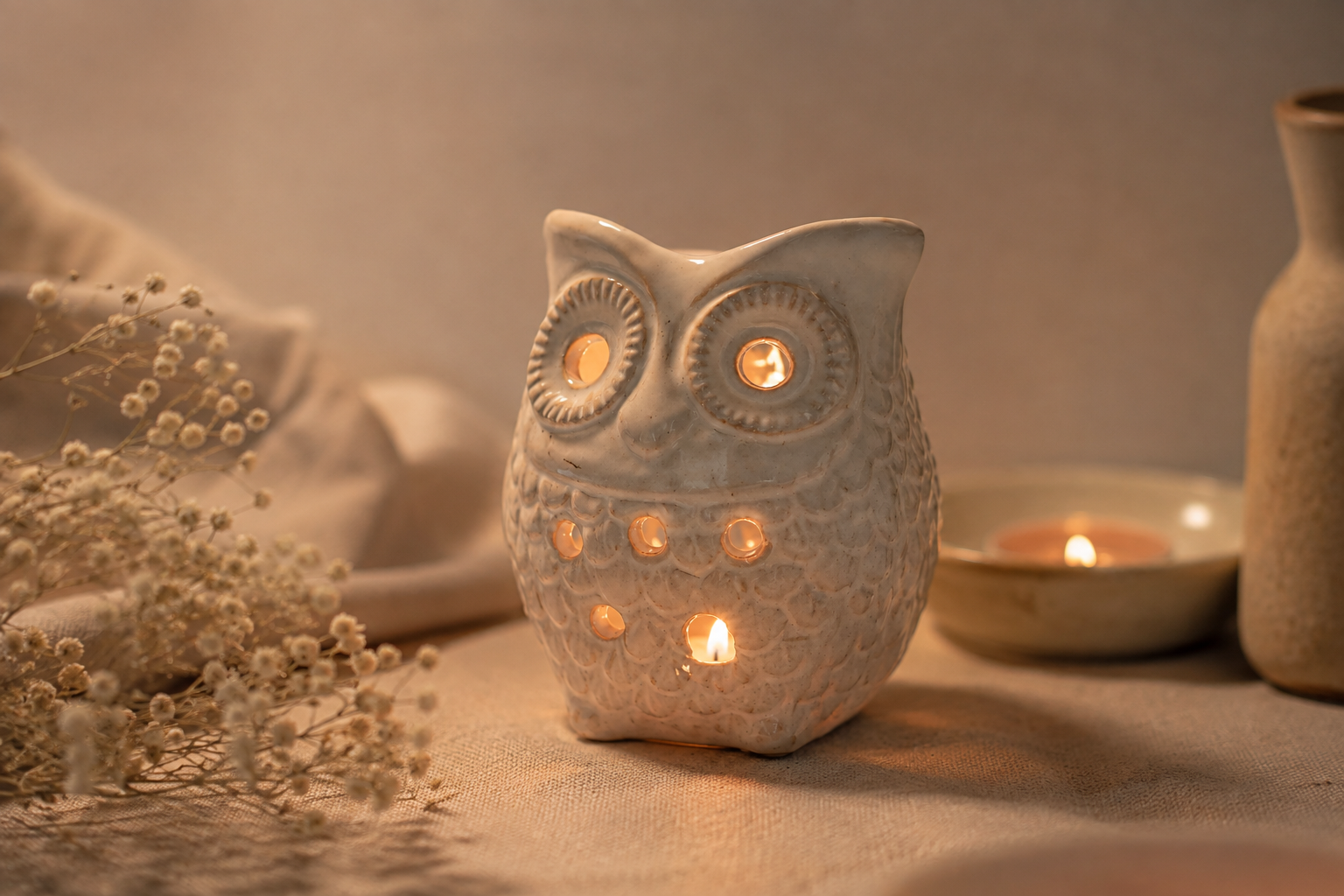
The setting in which a tealight is placed can shape the experience too. A candle placed on a bare table might feel starker and more contemplative. One nestled among stones, dried flowers, or other small objects might feel more layered and personal. There is no fixed formula here. Many people find that their preferences shift with the seasons or with whatever they happen to be working through at a given time.
It can be tempting to think that a meaningful practice requires elaborate tools or lengthy sequences of steps. A tealight ritual offers a gentle counterpoint to that assumption. The entire practice might consist of nothing more than lighting a match, watching the wick catch, and sitting for a few quiet minutes before the flame is allowed to go out. There is a kind of freedom in that simplicity. It removes the pressure to perform a ritual correctly and instead invites a person to simply show up, light a small flame, and see what happens in the space that follows.
Over time, some people find that the tealight itself becomes almost secondary to the pause it represents. The object is small and inexpensive, easily replaced when it burns down. What tends to matter more is the repeated choice to set aside a few minutes, strike a match, and allow a small point of light to anchor a moment of stillness in an otherwise busy day.
If this kind of practice speaks to you, we invite you to explore our collection of tealight candles, tealight holders, and ritual tools to create a calming space that supports your daily rituals and moments of reflection.

Our offerings—ceremonial cacao, crystals, candles, and journals—are designed to support mindfulness, self-connection, and sacred daily rituals. Every product is ethically sourced, handcrafted with care, and infused with meaning to help you slow down, tune in, and create moments of presence.
© 2025 All rights reserved Conscious Collective