Walk into any grocery store and the word cacao might appear on a dozen different products, from baking chips to protein powders to drinking blends. Walk into a wellness shop or a cacao ceremony and the same word might appear again, this time attached to a very different kind of product entirely. For newcomers, this overlap in language can create genuine confusion. Is ceremonial cacao simply a marketing term applied to the same beans used in candy bars, or is something more substantial going on beneath the surface?
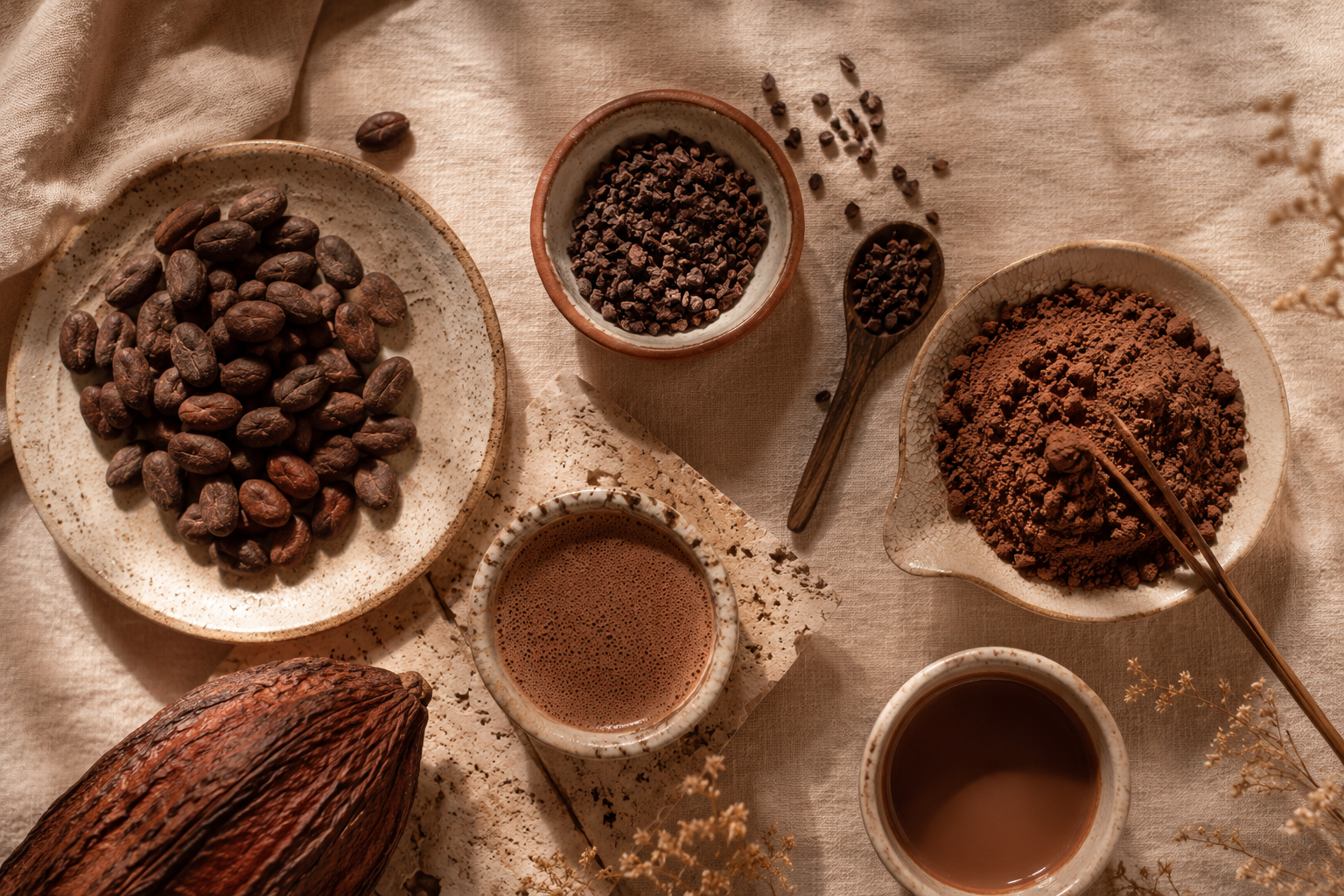
Cacao begins as the seed of the Theobroma cacao tree, native to Central and South America and now cultivated in various tropical regions around the world. After harvesting, the beans undergo fermentation and drying before being processed further. From this point forward, the path a bean takes can diverge significantly depending on its intended use.
Culinary cacao, the kind found in most commercial chocolate products, typically undergoes a series of processing steps designed to maximize shelf stability, flavor consistency, and manufacturing efficiency. This can include roasting at higher temperatures, alkalization (sometimes called Dutch processing) to adjust flavor and color, and the addition of sugar, milk solids, emulsifiers, or other ingredients. These steps are not inherently problematic. They exist to serve the goals of mass food production, where consistency and shelf life matter a great deal.
Ceremonial cacao tends to follow a different path. It is often minimally processed, stone ground rather than machine processed at high heat, and left free of additives. Many producers work directly with small farms, sometimes using heirloom or criollo varieties of cacao that are less common in commercial chocolate production. The goal here is not primarily flavor consistency across a mass market but rather preserving as much of the bean’s original composition as possible.
Cacao naturally contains a range of compounds, including theobromine, small amounts of caffeine, flavonoids, and a compound called phenylethylamine, sometimes associated with feelings of wellbeing. Heavy processing, particularly high heat roasting and alkalization, can reduce the presence of some of these compounds. This does not mean that culinary chocolate has no beneficial properties at all. Many studies on dark chocolate and flavonoid content have used commercially available products. However, ceremonial cacao proponents often point to its minimal processing as a reason it may retain a fuller spectrum of the bean’s original compounds.
It is worth noting that research into cacao’s specific effects, particularly in the context of ceremony or ritual use, remains fairly limited compared to research on chocolate more broadly. Much of what is understood about ceremonial cacao’s traditional and modern significance comes from anthropological and cultural sources, community practice, and personal accounts rather than large-scale clinical trials. This does not diminish the value many people find in the practice, but it may be worth approaching with a balanced perspective rather than treating every claim as settled science.
Cacao held deep cultural and spiritual significance among various Mesoamerican civilizations, including the Maya and Aztec peoples, long before it became associated with modern wellness culture. Historical accounts describe cacao being used in ceremonies related to marriage, birth, death, and communal gathering. It was sometimes considered a gift from the divine, reserved for particular occasions or classes of people, and prepared in ways quite different from the sweetened, milk-based chocolate familiar in much of the world today. Traditional preparations often involved grinding roasted beans into a paste, then mixing with water, spices such as chili, and sometimes other botanicals, producing a drink that bore little resemblance to a modern candy bar.
Contemporary cacao ceremonies, while drawing inspiration from these historical roots, often represent a blend of traditional practice and more recent wellness or spiritual frameworks. Some ceremonies are led by practitioners with direct lineage connections to cacao-growing communities, while others have developed independently within broader meditation, yoga, or plant medicine circles. This diversity of approach means that ceremonial cacao today is not a single fixed tradition but rather a living, evolving practice shaped by many hands.
Part of what distinguishes ceremonial cacao from culinary cacao may lie not just in the bean itself but in the intention and setting surrounding its consumption. A cup of ceremonial cacao prepared with attention, perhaps alongside meditation, breathwork, or shared intention setting within a group, is a fundamentally different experience from sipping a mug of hot cocoa while scrolling through a phone. The same could arguably be said of many foods and beverages. Context and attention shape experience in ways that go beyond the literal chemical composition of what is being consumed.
Many practitioners describe cacao ceremony as an opportunity to slow down, connect with others, and create space for reflection or emotional processing. The warmth and slight bitterness of the drink, combined with its slower, more deliberate preparation, can serve as a kind of anchor for the broader ritual taking place around it. In this sense, ceremonial cacao functions similarly to other ritual substances or objects across cultures, where the item itself becomes a vehicle for a larger, more intentional experience.
For those interested in trying ceremonial cacao, a few practical distinctions can help when navigating the market. Ceremonial cacao is typically sold in paste or block form rather than as chips or powder mixed with sugar. The ingredient list, when available, usually shows nothing beyond cacao itself, sometimes with information about the specific farm or region of origin. Pricing tends to reflect the more labor-intensive, small-batch nature of production, so ceremonial cacao is often more expensive by weight than mass-produced chocolate products.
Reputable sources will often share information about sourcing, including which farm or cooperative the beans came from and how the beans were processed. This transparency can be a useful signal, since ceremonial cacao’s value proposition rests heavily on the idea of minimal processing and mindful sourcing. A product that makes ceremonial claims without offering any information about origin or processing may be worth a second look.
Preparing ceremonial cacao at home does not require formal training or a group setting, although some people do find value in guided ceremonies led by experienced practitioners. A simple home practice might involve grating or chopping a small amount of cacao paste, gently heating it with water, and taking a few quiet moments before drinking to set an intention or simply notice how the body feels. Some people pair this with journaling, meditation, or quiet reflection, while others simply enjoy it as a warm, grounding beverage that feels distinct from their usual coffee or tea.
As with any practice involving stimulant compounds, it is worth paying attention to individual sensitivity, particularly around theobromine and caffeine content, and adjusting serving size accordingly. Those with certain health conditions or who are pregnant may want to consult a healthcare provider before incorporating ceremonial cacao into a regular practice.
Neither ceremonial nor culinary cacao is inherently superior in every context. A person baking a birthday cake has little use for ceremonial-grade cacao paste, and a person seeking a slow, reflective ritual experience may find little value in a bag of chocolate chips. Understanding the difference allows for a more informed choice based on what a person is actually hoping to get out of their cacao, whether that is a delicious dessert or a quiet moment of connection and reflection.
If you are curious to explore ceremonial cacao for yourself, we invite you to browse our collection of ceremonial cacao, cacao accessories, and ritual tools designed to support a mindful daily practice and meaningful cacao rituals.

Our offerings—ceremonial cacao, crystals, candles, and journals—are designed to support mindfulness, self-connection, and sacred daily rituals. Every product is ethically sourced, handcrafted with care, and infused with meaning to help you slow down, tune in, and create moments of presence.
© 2025 All rights reserved Conscious Collective